Mozu-hachimangu, Shinto shrine in Japan
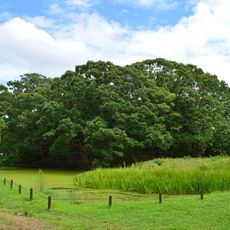
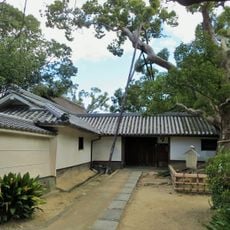
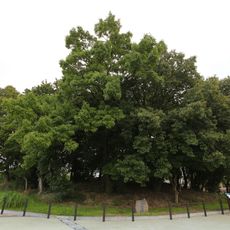
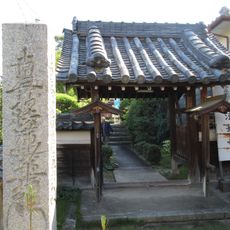
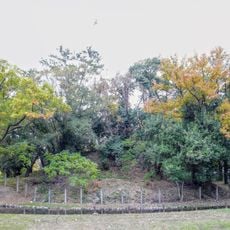
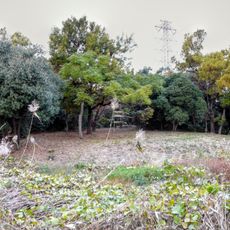
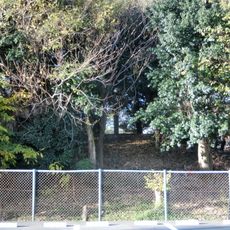
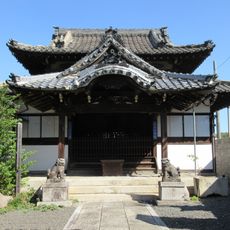
Mozu-hachimangu is a Shinto shrine in the Kita ward of Sakai, Osaka Prefecture. Its main hall (honden) was rebuilt in 1726 and its worship hall (haiden) in 1830, both repaired in 1971. The roughly 10,000-tsubo grounds hold a camphor tree about 800 years old, 25 m tall with a 5.2 m trunk circumference, designated a natural monument by Osaka Prefecture.
Tradition credits the shrine's origin to Empress Jingū, who vowed on this spot to protect the realm after returning from Korea, and to the reign of Emperor Kinmei (532–571), when the area was named Mozu. In 729 the monk Gyōki founded Mandai-ji as its inner temple. By 1158 it was a branch of Iwashimizu Hachimangū; it was devastated in the Sengoku period and the 1615 summer siege of Osaka. The present honden dates from 1726 and the haiden from 1830, both repaired in 1971.
The shrine honors Hachiman, a deity associated with war and protection in Japanese tradition, and visitors can observe how local people still visit for personal prayers and blessings. The space remains an active part of community life rather than serving only as a historical site.
The shrine is located in Sakai and can be reached on foot from the city center, as it sits in an established area. Visitors should wear appropriate clothing and observe the usual rules of respect that apply at sacred sites.
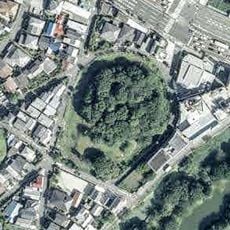
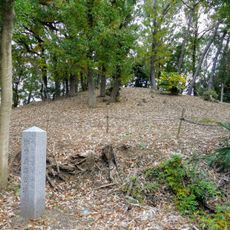
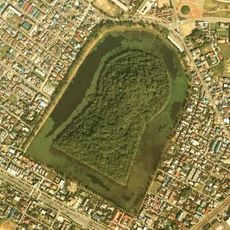
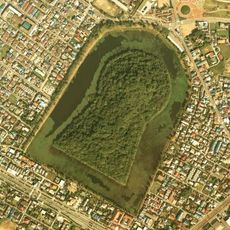
The shrine's sacred camphor tree, about 800 years old, is a natural monument of Osaka Prefecture, measuring 1.8 m in diameter at breast height, 5.2 m in trunk circumference and 25 m tall. Another claim holds that the Mausoleum of Emperor Ōjin is not the tomb at Habikino but the Mozu Mausoleum just west of the shrine, which was therefore treated as its inner sanctuary.
The community of curious travelers
AroundUs brings together thousands of curated places, local tips, and hidden gems, enriched daily by 94,405 contributors worldwide.