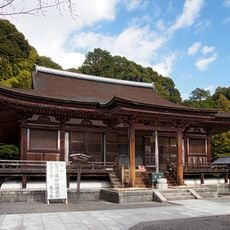
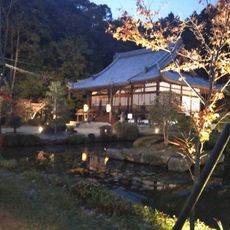
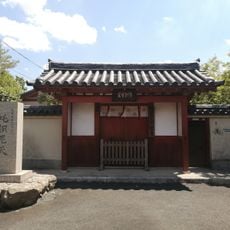
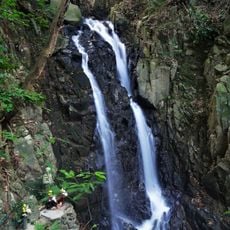
獅子窟寺, Buddhist temple in Katano, Japan.
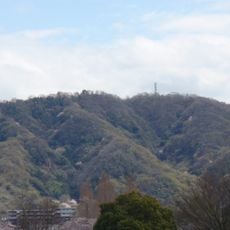
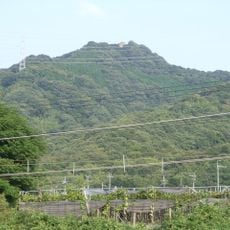
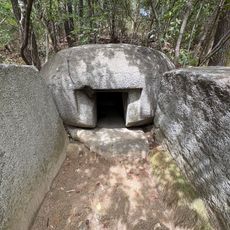
Shishikutsuji stands nestled among massive rock formations in a mountainous setting, with its most distinctive feature being a cave structure that resembles a lion's mouth. The temple grounds incorporate these natural geological elements into its layout and design.
According to the temple record Shishikutsuji-ki (1692), the site was first opened by En no Gyōja around the reign of Emperor Monmu. Later, by order of Emperor Shōmu, Gyōki built a hall under the name Kongō Hannya-kutsu. In the Tenchō era (824–833) Kūkai performed a ritual to Butsugen Butsumo here, and the temple was rebuilt in the 14th century through the patronage of Emperor Kameyama.
The temple name comes from the Lion Rock (Shishi-iwa), a boulder shaped like a roaring lion; Kukai is said to have practised asceticism there. The precinct holds many named rocks, among them Kannon-iwa, Kagami-iwa and Hachijo-iwa. The site was a mountain retreat of Katsuragi Shugendo in the Heian period, and a poem by Prince Shizuhito, composed while he stayed in the "lion's rock cave", appears in the Shingosenshu wakashu.
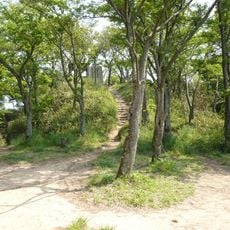
The steep mountain trail leading to the grounds spans approximately 1 kilometer and requires moderate physical fitness to navigate comfortably. Sturdy footwear and sufficient time are essential, as the path is narrow and includes sections with significant elevation gain.
The temple's name comes from a rock formation shaped like a roaring lion, found among the boulders of Mount Fumisen. Nearby is a rock called the "woman rock," where Kukai is said to have practiced ascetic training in the 9th century. The grounds also hold two graves attributed to Emperor Kameyama and Empress Fujiwara no Kishi.
The community of curious travelers
AroundUs brings together thousands of curated places, local tips, and hidden gems, enriched daily by 93,806 contributors worldwide.