Iwatsutsukowake Shrine, Shinto shrine in Ishikawa, Fukushima Prefecture, Japan
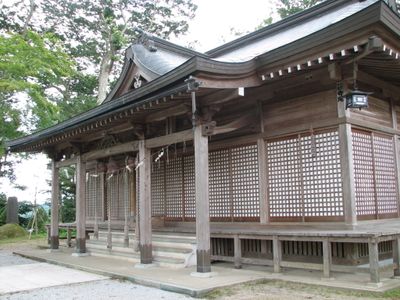
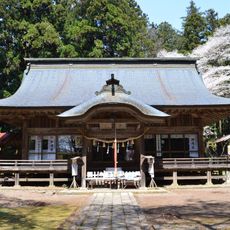
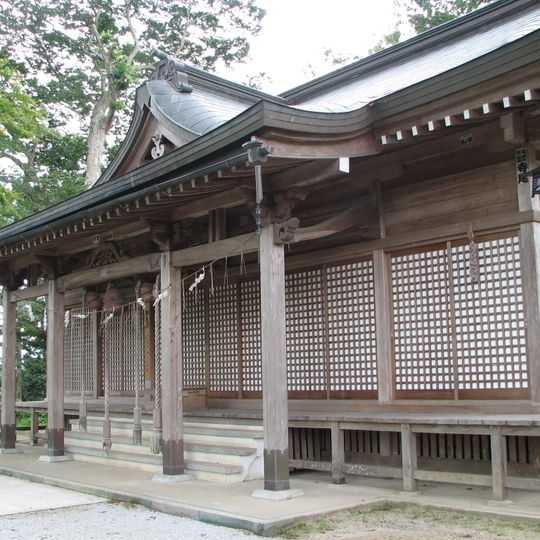
Iwatsutsukowake Shrine stands on the summit of Hachiman-yama in Ishikawa, Fukushima Prefecture. Its wooden worship hall rests on a stone and concrete base, reached by a short flight of steps; square posts divide the front into bays of light-wood lattice, a thick curved beam runs above them, and white paper streamers hang near the left posts.
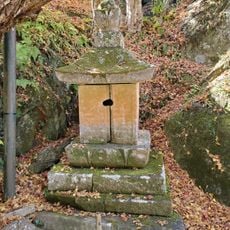
The shrine stands on Mount Hachiman, where numerous stone ritual enclosures (iwakura) show worship from ancient times; its founding date is unknown. It is a candidate for the shrine recorded in the Engishiki as Iwatsutsukowake Shrine of Shirakawa District, Mutsu Province. In 1063 Minamoto no Arimitsu moved here, took the name Ishikawa Arimitsu and built the Misasu Castle beside the shrine; his line held it for 25 generations until Toyotomi Hideyoshi confiscated it. In 1066 he invited the Hachiman and Okuninushi deities from Iwashimizu Hachimangu and enshrined them here.
The shrine holds the rank of ichinomiya, making it the most important shrine in its region and a central gathering place for the local community across generations. This status shapes how people use the space today, returning regularly for prayers and traditional ceremonies that connect them to the deities believed to dwell here.
Visitors typically pass through the main gate and rinse their hands and mouth at a water basin before entering the prayer area to prepare mentally for worship. The grounds are easy to navigate and provide ample space to walk at your own pace while exploring the different shrines.
The shrine's pair of komainu guardian lions, carved in 1930 by stonemason Kobayashi Kazuhei, are called the "Flying Lions" and were designated a cultural property of Ishikawa Town in 2016. A bronze bell-like waniguchi, donated in 1423 by Ishikawa Mochimitsu, is a Fukushima Prefecture cultural property.
The community of curious travelers
AroundUs brings together thousands of curated places, local tips, and hidden gems, enriched daily by 95,000 contributors worldwide.