Chōroku-ji, Buddhist temple in Sukagawa, Japan
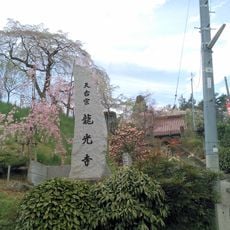
Chōroku-ji is a Sōtō Zen temple in Kitamachi, Sukagawa, founded in 1457 and named after the Chōroku era. It was built by Nikaido Tameuji as the family temple of the Nikaido clan, who ruled Sukagawa Castle, and it served as the head temple of about 130 branch temples in Mutsu, Echigo and Shimotsuke provinces.
Nikkai Tameuji, lord of Sukagawa Castle, founded Chōroku-ji in 1457 as a family temple and invited the Sōtō Zen monk Gessō Meitan from Kamakura as founding abbot. In 1460 Emperor Go-Hanazono granted Meitan the title Butsunichi Eshō Zenji and purple robe, making the temple an imperial prayer site with over 130 branch temples. It burned in Date Masamune's 1589 attack on Sukagawa Castle, was rebuilt shortly after, and moved to its present site in the Bunroku era (1592–1596).
The temple takes its name from the Chōroku era (1457), the year of its founding. In 1460 Emperor Go-Hanazono granted the monk Getsusō Meitan the title Butsunichi Eshō Zenji and a purple robe, making Chōroku-ji an imperially sanctioned temple. In 1916 a kindergarten opened on the grounds, later the Sukagawa Kindergarten of the Chōroku-ji Gakuen school corporation.
Chōroku-ji stands in the Kitamachi district of Sukagawa, Fukushima Prefecture, at the foot of the hills east of the city centre. The temple moved to this site during the Bunroku era (1592–1596), after its earlier grounds near the present Chōshō-in. Visitors reach it on foot from Sukagawa Station; the precinct holds the graves of Ōjō-in and of warriors killed when Sukagawa Castle fell in 1589.
In 1916 a kindergarten opened on the temple grounds; it later became Sukagawa Kindergarten of the Chōroku-ji Gakuen school corporation. The temple also keeps the grave of Ōjō-in, a daughter of the Date family married into the Nikaido, who died in 1602 while staying here.
The community of curious travelers
AroundUs brings together thousands of curated places, local tips, and hidden gems, enriched daily by 94,035 contributors worldwide.