Ishi-no-Hōden, Archaeological site in Takasago, Japan
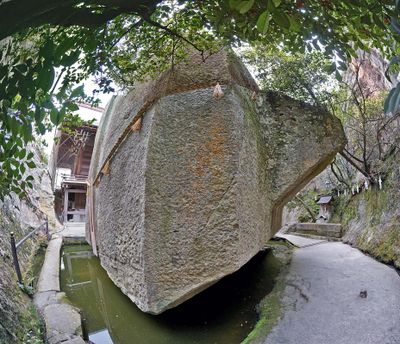
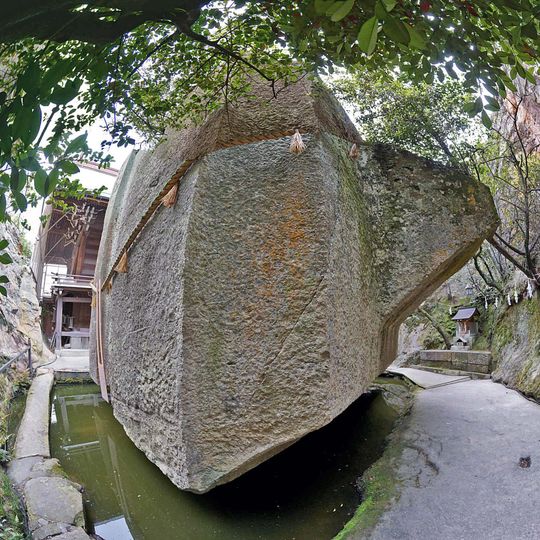
Ishi-no-Hōden is an archaeological site in Takasago, Japan, where a huge tuff block sits on natural bedrock. The block features carved recesses all around its base and displays a triangular raised section at the back made from the same material.
The Harima no Kuni Fudoki, compiled around 713–717, records a stone shaped like a house, two jō long and one and a half jō wide and high, called Ōishi and attributed to Mononobe no Moriya under Prince Shōtoku, though Moriya had already died. In 1979 the monolith was designated a National Historic Site together with the Tatsuyama quarries. Laser surveys in 2005–2006 left its date, maker and purpose unresolved.
The name comes from Japanese and means stone palace or stone shrine, reflecting the religious importance people attach to this site. Visitors today see worshippers treating the carved block as a sacred object and performing traditional rituals around it.
The monolith is 1.5 km from Hoden Station on the JR West San'yō Main Line; from the south exit, walk about 25 minutes or take the Jōton bus to the Fureai no Sato Ōshiko stop, then walk 5 minutes. A path between the bedrock and the stone lets one adult circle it, for an admission fee; the trail to the summit of Hōdenyama, with a stone marking an imperial visit, starts beside the monolith and is free.
The block is called Ame no Ukiishi, the "floating stone of heaven", because a pillar at the centre of its base is hidden from eye level, so the mass seems to hover over the pond. Shrine tradition holds that this pond never dries in drought and that its level follows the sea's tides.
The community of curious travelers
AroundUs brings together thousands of curated places, local tips, and hidden gems, enriched daily by 93,451 contributors worldwide.