Ishiba Family Residence, Historic merchant residence in Kamenokomachi, Japan
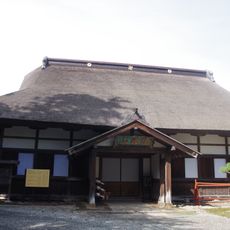
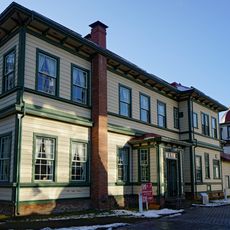
The Ishiba Family Residence is a historic merchant house in Kamenokomachi with its original wooden framework and traditional wooden pillars intact. The main living area features an open hearth and displays the spatial arrangement typical of a prosperous trading family's home.
The Ishiba family were merchants attached to the Hirosaki domain and dealt mainly in straw goods, later shifting to sake and tobacco. A grave marker from the Genroku era at the family temple suggests the line dates at least to the early 18th century, and each head of house took the name Seibei. The first building dates to the early 18th century; the main house is thought to have been moved to its present site before Kamenokomachi's Kame-no-mon gate in the early 19th century. It was designated an Important Cultural Property on 23 February 1973.
The family traded mainly in straw goods during the Edo period, later shifting to the sale of sake and tobacco, and the house name has been kept unbroken. The head of the household was always called Seibei. The main house stands on a corner, with its south and west sides facing the streets and a Tsugaru-style komise, a wooden arcade sheltering against rain and snow.
The house is located in a traditional town area and is easy to reach on foot. Visiting during daylight hours helps you appreciate the wood details and natural light that illuminates the interior spaces.
The house stands on a corner lot, with its south and west sides facing the streets, and a wooden arcade called komise shelters its entrances from rain and snow. This komise is a feature particular to the Tsugaru region.
The community of curious travelers
AroundUs brings together thousands of curated places, local tips, and hidden gems, enriched daily by 93,507 contributors worldwide.