神宮寺, Buddhist temple in Toyohashi, Japan
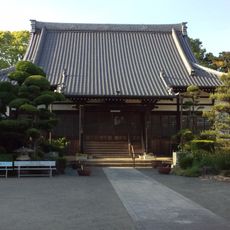
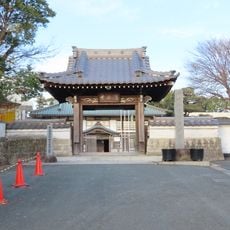
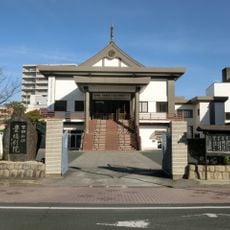
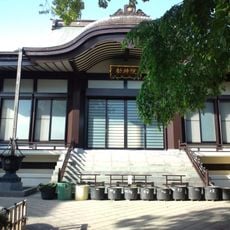
Jinguji is a Tendai Buddhist temple in the Uo-machi district of Toyohashi, with the honorific names Shouju-in and Hakuun-zan. Its honzon is a Dainichi Nyorai statue brought from Fumon-ji on Mount Senkyo in the city's Kumoya-cho. The grounds hold a main hall, a monks' quarters and a Jizo hall; all buildings burned in the June 1945 Toyohashi air raid.
The temple began as Chōzen-ji, a ruined Zen temple in Yoshida, Mikawa Province. In 1596 the monk Shigenobu Hōin, formerly of Hazu Shrine in Chita, rebuilt it, renamed it Jingū-ji and converted it to the Tendai school. It later became a branch temple of Kan'ei-ji in Ueno, and the Yoshida lord Onogawara Nagatoshi ranked it among the three great temples of Yoshida. In June 1945 the Toyohashi air raid burned down every building.
The temple serves as a living place of worship where you can watch local practitioners perform daily prayers and rituals. The way people move through the grounds and interact with the space reflects the deep Buddhist traditions that continue here.
The temple is easily accessible by public transportation, with bus stops within walking distance of the entrance. The grounds are straightforward to explore on foot, and visitors should dress respectfully when entering the worship areas.
The main image, a Dainichi Nyorai, was brought here from Fumon-ji on Mount Senkyo in Kumagaya, Toyohashi, a temple traditionally founded by Gyoki. The temple also serves as the Ebisu stop on the Yoshida Seven Lucky Gods pilgrimage, a circuit opened in 1997.
The community of curious travelers
AroundUs brings together thousands of curated places, local tips, and hidden gems, enriched daily by 94,668 contributors worldwide.