Chest opened
+${chestReward.xp} XP
Explorer
NOUVEAU ×${chestReward.collectible.quantity}
tapez pour fermer

See the monuments around you in AR Open chests in the app

Around Us is built for your phone — point your camera at the streets and discover the monuments and places around you in augmented reality. Around Us is built for your phone — chests unlock when you walk, explore and capture nearby places.

•

Enable Location

We need your location to show you interesting places around you

Discover nearby places

Find interesting locations and hidden gems around you

Precise directions

Get accurate directions and distances to places

Your location is never shared with other users. It's only used when you tap the location button.

Jingu Bashi

Log in to your account

Start exploring — it's free

Trusted by 93,461 travelers worldwide

Continue with Google
Continue with Apple
or

We will send you a code to connect

By continuing, you accept our Terms and Conditions and our Privacy Policy

Check your inbox

We've sent a pincode in your inbox. Please enter the code below.

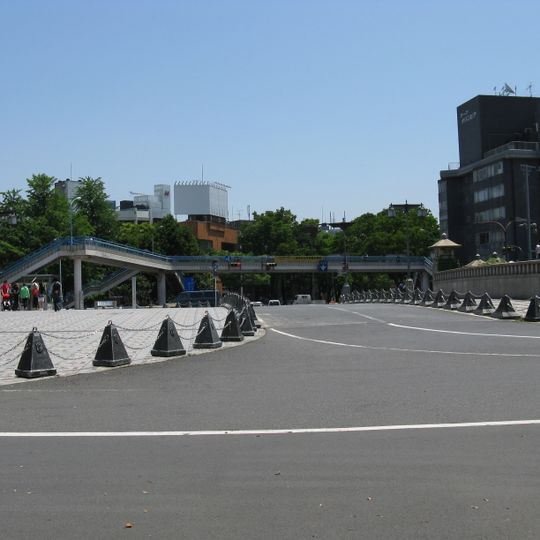
Jingu Bashi, road bridge in Jingūmae, Tokyo, Japan

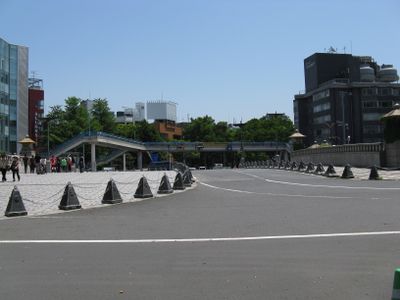
Jingūbashi is a 20.4-metre-long, 29.1-metre-wide reinforced concrete bridge over the Yamanote Line, linking Harajuku Station with the entrance to Meiji Shrine. Built in 1982, it replaced the 1920 original and keeps that bridge's ornamental railing pillars. It is open to traffic and has a wide pedestrian area.

The first Jingūbashi opened in September 1920 and was one of Japan's earliest reinforced concrete bridges. The present bridge, 20.4 metres long and 29.1 metres wide, dates from 1982 and replaced that original structure. It carries over the design and ornamental railing pillars of its predecessor.

Since the 1960s the bridge has drawn cosplayers, performers and people in visual kei or lolita fashion, sometimes gothic variants, who pose for photographs. The area was pedestrian-only until 1995, and opening it to motor vehicles is credited with reducing the bridge's popularity. A 2017 CNN guide noted that Harajuku Girls no longer gather there in large numbers.

You can access the bridge directly from Harajuku Station's east exit and should prepare for crowds. Weekends, especially afternoons, are extremely busy, making it harder to move across comfortably.

Until 1995 the surrounding area was closed to vehicle traffic on Sundays, creating a pedestrian zone that attracted street artists and musicians. This weekly closure made the location a notable hub for street art and unconventional culture in Tokyo.

The community of curious travelers

AroundUs brings together thousands of curated places, local tips, and hidden gems, enriched daily by 93,461 contributors worldwide.
Start exploring
Location
Inception
September 1920
GPS coordinates
35.66970,139.70230
Latest update
October 31, 2026 14:03
Reviews
Share your experience

No review yet

Discussions
Start a discussion...

No discussion yet

« Jingu Bashi - road bridge in Jingūmae, Tokyo, Japan » is provided by Around Us (aroundus.com). Images and texts are derived from Wikimedia project under a Creative Commons license. You are allowed to copy, distribute, and modify copies of this page, under the conditions set by the license, as long as this note is clearly visible.

Discover hidden gems everywhere you go!

From secret cafés to breathtaking viewpoints, skip the crowded tourist spots and find places that match your style. Our app makes it easy with voice search, smart filtering, route optimization, and insider tips from travelers worldwide. Download now for the complete mobile experience.
Around Us App Screenshot
❝

A unique approach to discovering new places❞

— Le Figaro

❝

All the places worth exploring❞

— France Info

❝

A tailor-made excursion in just a few clicks❞

— 20 Minutes

Around Us
Travel Guide & Maps
Download

Send to your phone

QR Code
1

Open the camera app on your mobile.

2

Point at the QR code with your camera. A notification will appear.

3

Tap the notification to open the link.