Migukurumitama-jinja, Shinto shrine in Japan
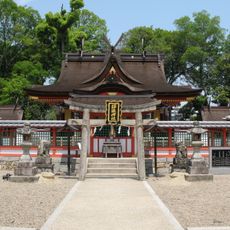
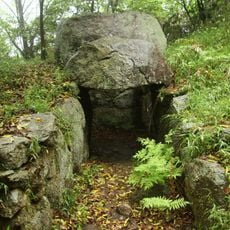
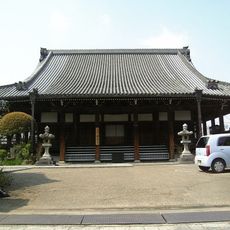
Migukurumitama-jinja is a Shinto shrine in Tondabayashi, Osaka Prefecture, oriented east toward Mount Nijō. Its main hall (rebuilt in 1660) stands on a hillside, with an upper worship hall before it and a lower worship hall at the foot. Behind the main hall rises a sacred hill with four kofun burial mounds, including a 58-meter keyhole-shaped tomb.
According to shrine tradition, it was founded in the 10th year of Emperor Sujin (traditionally 88 BCE), when the emperor had the deity's wild spirit enshrined from Izumo's Kitsuki Taisha. In 1331 the shrine was burned by shogunal forces during the Akasaka castle war, then rebuilt with land donated by Kusunoki Masashige. Toyotomi Hideyoshi's 1585 Kishu campaign destroyed the halls and 17 sub-temples; the main hall was rebuilt in 1660.
The shrine is also called Shimosuibun-no-yashiro and, with Take-Mikumaru and Nishikori shrines, forms the "three Mikumari shrines of Kawachi". Its name derives from mikukuru-mitama, "water-swimming spirit", as the deity is a water god. The autumn festival falls on the third Friday of October.
The shrine is best reached on foot and works well as part of a leisurely walk through the surrounding area. The grounds themselves are freely accessible and require no special preparation or equipment.
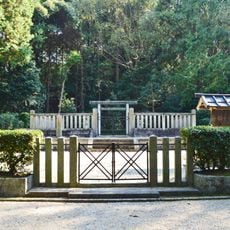
Behind the main hall rises a sacred hill with four burial mounds. The largest, a keyhole-shaped tomb about 58 metres long from the early Kofun period, is worshipped as the shrine's inner sanctuary; a bronze mirror is said to have been found near it around 1930, and cylindrical haniwa were unearthed on the mound.
The community of curious travelers
AroundUs brings together thousands of curated places, local tips, and hidden gems, enriched daily by 95,461 contributors worldwide.