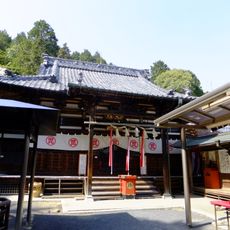
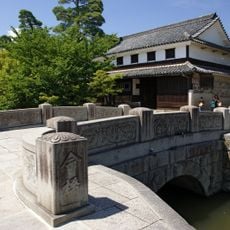
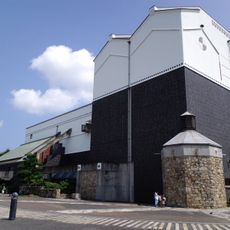
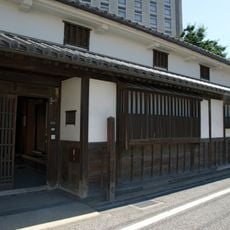
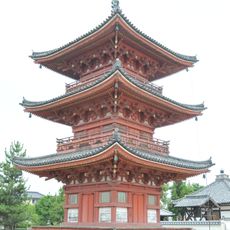
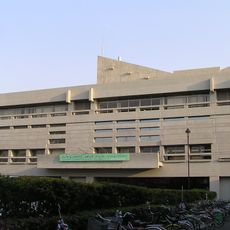
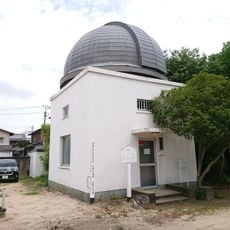
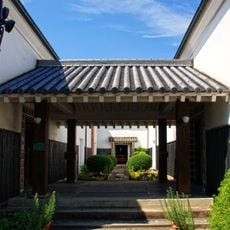
Kanryū-ji, Buddhist temple in Achi, Kurashiki, Japan.
Kanryū-ji is a Buddhist temple located on elevated ground at the edge of Tsurugata-yama-kōen park. From this high position, visitors can see across the surrounding town and the park's natural landscape.
Founded in 985 by the monk Gyōseitsu as a subtemple of Jishō-in (Saian-ji) in present-day Nishioka, it was first called Hokuto-zan Hōshaku-in. It moved to the foot of Tsurugata-yama in the Muromachi period, then to its present site in 1624, when it took the name Hōju-zan Kanryū-ji. Two fires in the 1740s destroyed the halls; the main hall was rebuilt in 1749. In 1624 it became bettō of Myōken-gū, separated in 1869 as Achi Shrine.
Kanryū-ji belongs to the Omuro school of Shingon Buddhism, not Zen, and its mountain name is Hōju-zan. It served as head priest (bettō) of the Myōken-gū shrine on Tsurugata-yama from 1624 until the 1869 separation of Shinto and Buddhism, when that shrine became Achi Shrine. The main hall, rebuilt in 1749, keeps roof tiles about 250 years old, stamped with tomoe, gentian and chrysanthemum crests.
The temple sits on a hillside and connects directly to the paths of Tsurugata-yama-kōen park. Visitors should wear sturdy footwear and expect some climbing to reach the entrance.
In 1866, about 100 deserters from the Second Kiheitai, a Chōshū domain unit, attacked the Kurashiki daikansho and then camped at Kanryū-ji; a spear scar from that night is still visible on the left kamoi gate.
The community of curious travelers
AroundUs brings together thousands of curated places, local tips, and hidden gems, enriched daily by 94,370 contributors worldwide.