Arakawa estuary bridge, Bridge infrastructure in Edogawa-ku, Japan
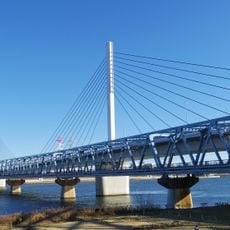
The Arakawa estuary bridge crosses the lower section of the Arakawa River in Edogawa-ku, linking eastern neighborhoods of Tokyo together. The structure accommodates both vehicle and pedestrian traffic while serving as a key transportation connection in this riverside district.
Design work began in October 1988, and the groundbreaking ceremony took place on 28 November 1989 on the Edogawa bank. The bridge opened on 4 July 1996 at a total cost of 37 billion yen, with a ceremony attended by Construction Minister Eiichi Nakao and about 400 local people. Three months after opening it carried 39,000 vehicles a day, rising to 46,000 a year later.
The two bridges carry National Route 357 and are named for their position at the Arakawa estuary; the downstream bridge is the lowest road bridge over the Arakawa. The Edogawa side's land approach separates from the roadway and climbs in a spiral, a shape pedestrians and cyclists can follow. The bridge is designated a Tokyo priority emergency transport route.
Access to the bridge is available around the clock for both pedestrians and vehicles, providing continuous passage across the river. Visitors should be aware that peak hours may bring heavier traffic and congestion.
The bridge's two decks are split around the Arakawa Bay Bridge of the Shuto Expressway: the downstream deck carries westbound traffic, the upstream deck eastbound. Because the adjacent JR Keiyo Line bridge and expressway bridge already stood, builders had only a narrow gap and used computer-managed large-block launching. The total cost was 37 billion yen.
The community of curious travelers
AroundUs brings together thousands of curated places, local tips, and hidden gems, enriched daily by 94,112 contributors worldwide.