Aratakiyama Castle, Mountain fortress in Ube City, Japan
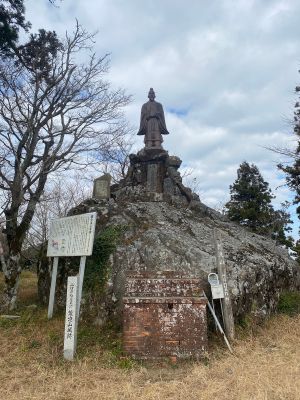
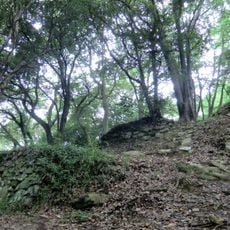
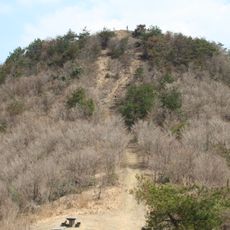
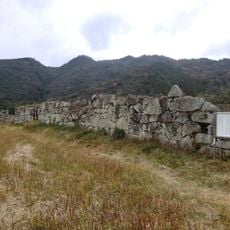
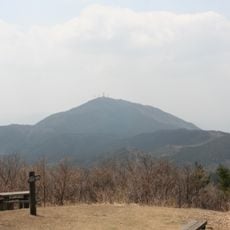
Aratakiyama Castle is a Sengoku-period mountain castle on 459-metre Mount Arataki in Ube, with remains spread about 700 metres east-west and 200 metres north-south. Its three bailey groups are the summit main bailey, the Senjōjiki detached bailey on the eastern ridge and the western bailey, separated by deep trenches; the north slope holds a group of ridge-cut dry moats.
Built on Mount Arataki, the castle is attributed to the Naito family, hereditary deputies of Nagato Province under the Ouchi clan. A 1558 document records Naito retainer Iwabu Sanemitsu as castle guard, and by around 1600 Masuda Motoyoshi held it. It was abandoned in the Edo period, after which its summit served as a signal-fire site.
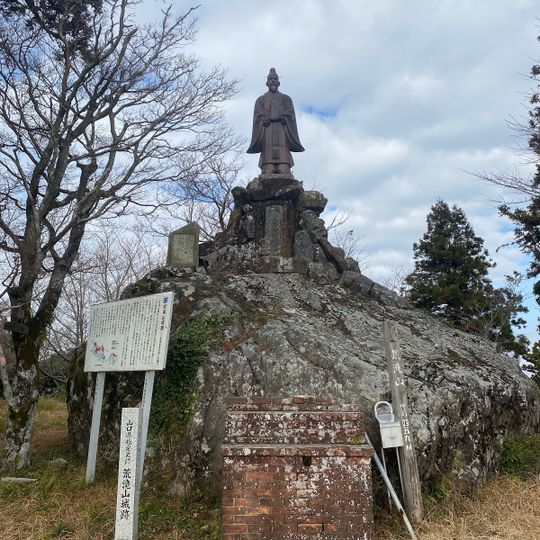
The castle is also called Arataki Castle, and its ruins are a prefectural historic site. The Naito served the Ouchi as governors of Nagato; Kyoto-style kawarake earthenware and imported Chinese and Korean ceramics found in excavations show that bond. The hilltop later served as a signal-fire site in the Edo period.
Walking paths with information signs guide you across the grounds, with the climb from the parking area taking about an hour. Sturdy shoes and plenty of water are important, as the trail becomes steep and offers little shade.
Excavations uncovered ceramics from Kyoto and pottery from China and Korea, showing this remote mountain fortress was connected to distant trade networks. These findings reveal that goods from across East Asia reached this isolated hilltop settlement.
The community of curious travelers
AroundUs brings together thousands of curated places, local tips, and hidden gems, enriched daily by 94,583 contributors worldwide.