Mount Zōzu, Protected mountain peak in Mitoyo and Zentsūji, Japan
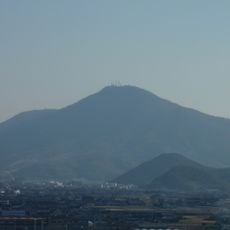
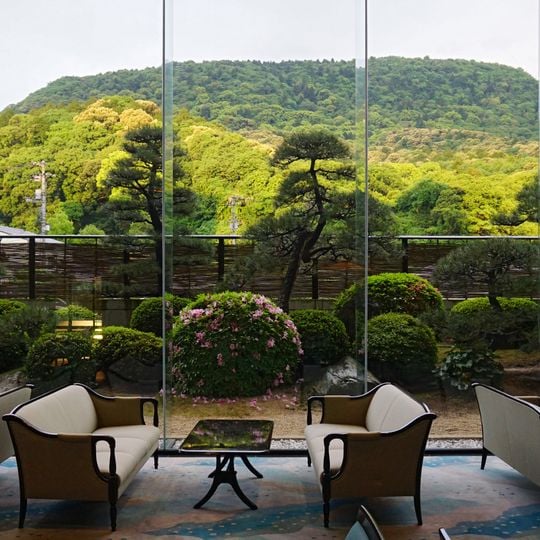
Mount Zōzu is a 616-meter mountain spanning Zentsuji, Kotohira and Mitoyo in Kagawa Prefecture, also called Ōasa-yama. Its lower part is granite and its upper part Miocene volcanic rock. The summit ridge is flat and forested, with a viewing area on the north side near the 616-meter high point looking over the Sanuki Plain and the Seto Inland Sea.
The mountain was designated a Place of Scenic Beauty and Natural Monument of Japan on 9 June 1951. Before the shrine's rise, a temple called Matsuo-ji stood on its slopes, and the mountain was then known as Matsuoyama. In 1573 the Kotohira Daigongen deity was enshrined here, and the site grew into a major pilgrimage destination.
The mountain's name is commonly explained by its profile from the Kotohira side, said to look like an elephant's head; another account links it to Gayāśīrṣa in India, rendered in Chinese sutras as 象頭山. Before the Kumbhira deity was installed here in 1573, the mountain was called Matsuo-yama after Matsuo-ji temple. The folk song "Konpira Fune Fune" names it.
Good walking shoes and enough water are recommended, as some sections of the trails are steep and uneven. If you plan to combine the mountain with a visit to the Kotohira-gu shrine, allow extra time since the shrine stairway alone has several hundred steps.
The name Zōzu means "elephant head" in Japanese, and the outline of the mountain is said to resemble the head of an elephant when seen from certain angles. This shape is thought to be one of the reasons why the site was considered sacred from an early time.
The community of curious travelers
AroundUs brings together thousands of curated places, local tips, and hidden gems, enriched daily by 93,591 contributors worldwide.