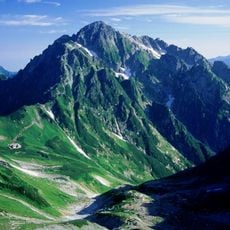
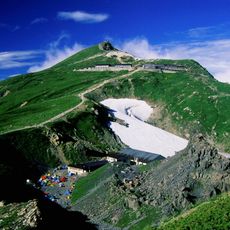
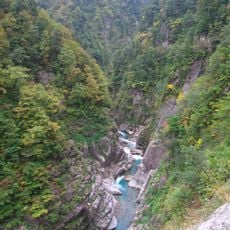
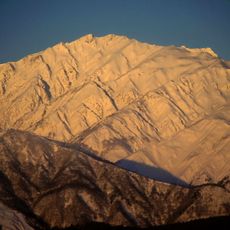
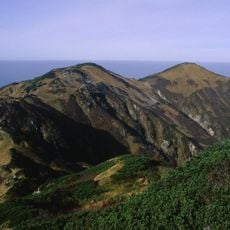
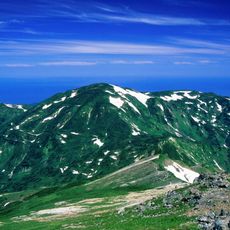
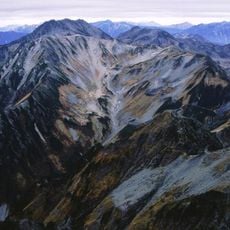
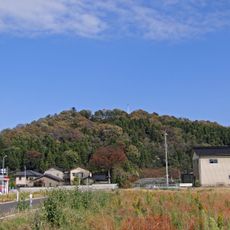
Etchū Komagatake, Mountain summit in Uozu and Kurobe, Japan.
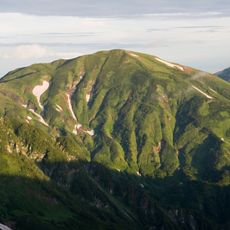
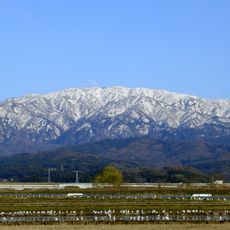
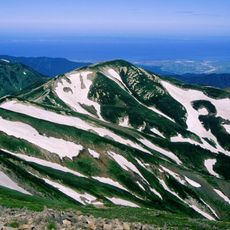
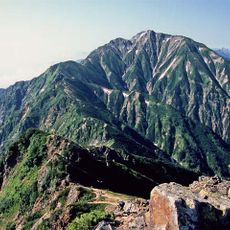
Etchū Komagatake is a mountain rising 2002 meters (6568 feet) between Uozu and Kurobe in Toyama Prefecture, with steep rocky slopes that define the local landscape. Multiple hiking routes zigzag up through varying terrain, offering different climbing experiences depending on the chosen path.
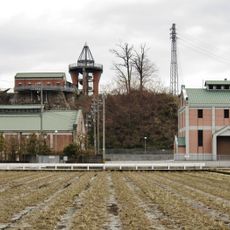
In 1944 and 1945, with support from the Japanese Army, molybdenum was mined on the northern ridge of Kita-Komagatake at about 1,700 m, roughly 1 km north of the summit. Ore and supplies were carried along the Unazuki ridge horse road and refined at a plant behind Kurobe Station on the Hokuriku Main Line. The mine was abandoned before the war ended; machinery wreckage and discarded ore remain along the trail from Onuma-dani through Sotogatake to Kita-Komagatake.
The name comes from the "horse snow picture" (koma no yukie): a horse shape that appears in the snow on the slope of North Komagatake as it melts in spring, best seen from the east of the Kurobe River and from the Funami plateau in Unazuki. In 2002, the Year of the Horse, volunteers built a new 2.7 km ridge trail from Mount Sobo, matching the summit's 2,002 m height to the horse theme.
The best climbing season runs from late spring through early autumn when conditions are safest for hikers. Starting points offer marked trails of varying difficulty, allowing visitors to choose based on their experience level and time available.
Between 1944 and 1945, with support from the Japanese Army, molybdenum was mined at about 1,700 m on the northern ridge of Kita-Komagatake. Ore and supplies were carried along the Unazuki ridge horse road and refined at a plant behind Kurobe Station on the Hokuriku Main Line before the mine closed near the war's end. Rusted machinery and discarded ore remain along the trail from Onuma-dani through Sōgadake to Kita-Komagatake.
The community of curious travelers
AroundUs brings together thousands of curated places, local tips, and hidden gems, enriched daily by 93,936 contributors worldwide.