Suwahara Castle, Mountain fortress in Shimada, Japan
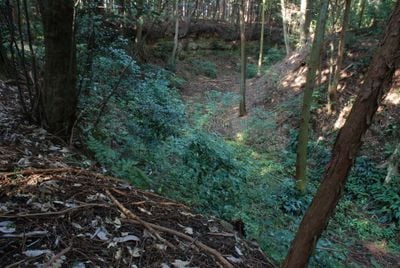
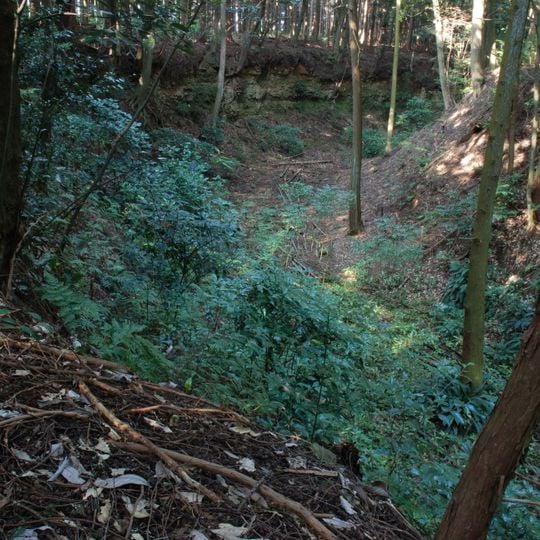
Suwahara Castle is a Sengoku-period yamashiro on a tongue-shaped spur at the northern edge of the Makinohara plateau in Shimada, Shizuoka. Its honmaru is a square of about 100 by 100 metres backed by a cliff; two concentric enclosures, roughly 100 by 80 metres and 200 by 80 metres, are each fronted by a semicircular umadashi about 40 metres wide, protected by dry moats. The whole castle measured about 300 by 200 metres, and a large dry moat continues along the cliff edge.
The fortress was built in 1573 by Takeda forces pushing into Tokugawa lands, then fell to Tokugawa Ieyasu in 1575 after a grueling siege lasting months. This shift marked the collapse of Takeda power in the region and the rise of the future shogun.
The castle takes its name from a Suwa shrine that the Takeda clan brought here from Shinano Province, since the Suwa kami were the Takeda's tutelary deities. No shrine building remains on the site today; the name survives in the ruins and in the record of the castle's origin.
The ruins lie about a 30-minute walk west of JR Kanaya Station, up the old Tōkaidō stone-paved slope; a Shimada city community bus (Kikugawa-Kamiyagami line) also serves the site, with five round trips on weekdays and three on weekends and holidays. The grounds are hilly, so wear walking shoes. The restored gate at the second bailey's north umadashi, rebuilt in 2016, marks the main entry route.
After the castle was abandoned in 1590, former Tokugawa retainers who followed Tokugawa Yoshinobu to Shizuoka reclaimed the overgrown site and turned it into tea fields. The castle grounds remain tea fields today, so the earthworks sit among cultivated bushes. Excavations from 2009 to 2015 also showed that the large circular umadashi bastions were probably built by the Tokugawa, not the Takeda.
The community of curious travelers
AroundUs brings together thousands of curated places, local tips, and hidden gems, enriched daily by 94,767 contributors worldwide.