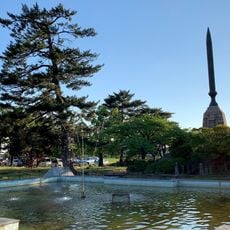
諏訪神社, Shinto shrine in Japan
Suwa Shrine is the chief tutelary shrine (sōchinju) of Shibata, known locally as "Osuwa-sama". Its 2004 reconstruction reproduces the hall lost to fire in 2001: honden, heiden and haiden form a single connected building, unusually large for this type of shrine. In front of the worship hall stands a sacred onbashira pillar received from Suwa Taisha, replaced every six years.
Tradition dates the shrine's founding to 648, when it stood on Suwa-yama in what is now Seirō, Kitakanbara District; migrants from Shinano Province brought the divided deity from Suwa Taisha. The Sasaki and Shibata lords later moved it near Shibata Castle. In the Edo period, lord Mizoguchi Hidekatsu relocated it inside the castle, and in 1688, under the fourth lord Shigeo, it reached its present site. The hall built in 1756 burned down in November 2001 and was rebuilt in 2004 with citizens' donations.
The shrine is affectionately called 'Osuwa-sama' by locals and serves as the heart of community celebrations and traditions. The annual Shibata Festival features an energetic procession with elaborately decorated floats carried by groups of people, reflecting the town's deep connection to its spiritual heritage.
The shrine is just a three-minute walk from JR Shibata Station, making it very accessible on foot. Parking is available for about 50 cars, and larger buses can also park at the site.
Around 30,000 people visit the shrine during New Year celebrations to seek blessings for health and good fortune together as a community. Many visitors purchase small charms or offerings to ensure personal good luck, showing how deeply the shrine is woven into local daily life.
The community of curious travelers
AroundUs brings together thousands of curated places, local tips, and hidden gems, enriched daily by 93,672 contributors worldwide.