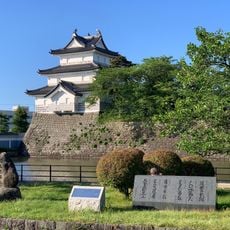
Ashigaru Nagaya, Traditional row house in Shibata, Japan.
The Ashigaru Nagaya is a traditional row house in Shibata, Japan, consisting of eight connected residential units arranged in a linear configuration. The structure features simple, functional spaces with shared walls and basic facilities typical of dwellings built during the Edo period.
The building is a thatched row house for eight households of ashigaru, lower-ranking foot soldiers of the Shibata domain, not samurai. Its construction date is uncertain, but a ridge tag reading "Tenpō 13" (1842) was found during the 1969 dismantling and repair, and the house is dated to that year. It was still lived in until the year before that repair.
The wooden structure displays traditional Japanese architectural features such as tatami flooring and shared walls that reflect the social hierarchies of feudal times. The layout shows how ordinary soldiers and their families organized their daily lives in these modest spaces.
The row house is about a seven-minute walk from JR Shibata Station on the Uetsu and Hakushin lines. It is owned by the Hokuetsu Cultural Museum Foundation, so check opening arrangements with the museum before visiting; the building was restored in 1969 after being dismantled.
The building stands as one of the few surviving original examples of soldier housing from this era, revealing what such simple accommodations actually looked like in everyday use. This makes it a rare window into the material living conditions of ordinary people during the late Edo period.
The community of curious travelers
AroundUs brings together thousands of curated places, local tips, and hidden gems, enriched daily by 94,368 contributors worldwide.