那覇市民会館, Music venue in Naha, Japan
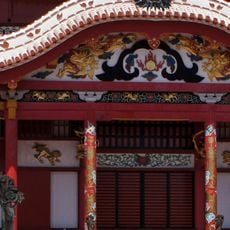
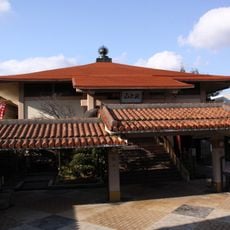
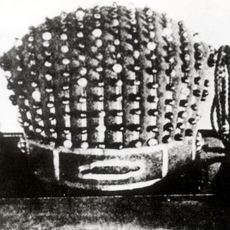
The Naha Civic Hall was a multipurpose hall in Yomogi, Naha, completed in November 1970 and closed in October 2016. Architect Shinkichi Kinjo, from Haebaru, designed it with a large hall of 1,504 seats and a medium hall for about 800 people. Its materials were gathered from regions across Okinawa, and the facade incorporated traditional elements such as amahaji eaves and a hinpun screen wall.
Completed in November 1970 under US administration, the hall was designed by architect Shinkichi Kinjo, a native of Haebaru, at a total cost of 1.82 million dollars, of which 160,000 dollars came from donations by institutions and citizens. On 15 May 1972 it hosted the Okinawa reversion ceremony alongside Tokyo's Budokan, while protests against the handover were held in the adjacent Yogi Park. It closed in October 2016 after seismic tests found it fell short of national standards, and demolition began on 15 November 2024.
The hall's name comes from its role as Naha's civic gathering place, and its stage hosted both the 1972 Okinawa reversion ceremony and, that same day, protests against the reversion in the adjacent Yogi Park. Its two grand curtains included a second one with a sunrise pattern, paid for by a donation from Matsushita Electric (now Panasonic).
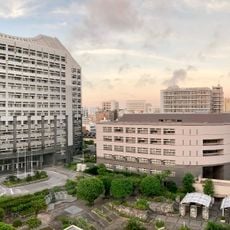
The hall stood in Yogi, Naha, about a 10-minute walk from Anri Station on the Yui Rail. It closed on 13 October 2016 after seismic tests found it would likely collapse in a quake of upper 6 intensity; demolition began on 15 November 2024 and is due to finish around February 2026. A new Manwa district branch office complex is planned for the site in 2028.
The hall was chosen in 2006 for DOCOMOMO Japan's selection of modern movement architecture, and its 3D survey by NHK Okinawa and Naha City produced a virtual version shown at the successor venue Nahart in 2022.
The community of curious travelers
AroundUs brings together thousands of curated places, local tips, and hidden gems, enriched daily by 93,597 contributors worldwide.