重蔵神社, Shinto shrine in Japan
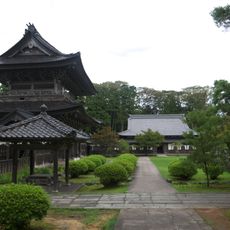
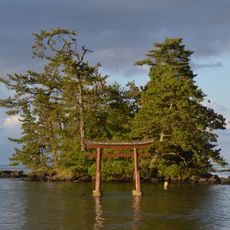
Juzou Shrine stands in the Kawai-machi district of central Wajima, Ishikawa Prefecture, and honours Amenofuyukinu and Okuninushi, deities linked in shrine tradition to Izumo and the pacification of Noto. Its torii collapsed in the 2024 Noto Peninsula earthquake, having been rebuilt only four years after the 2007 quake destroyed it.
According to shrine tradition, Juzou Shrine was founded in the 1st century BCE during the reign of Emperor Sujin. It became a prefectural shrine in 1918. Its former main hall, designated a protected building in 1906, burned in the 1910 Wajima fire; a torii rebuilt after the 2007 Noto earthquake collapsed again in the 2024 Noto Peninsula earthquake.
The shrine's name is written with the characters for "heavy" and "storehouse". Its February rite, the Kisaragi-sai, is performed by appointed parishioners called otō, whose role and related documents are a prefectural intangible folk cultural property. The shrine also keeps a wooden bodhisattva mask for a gyōdō procession, made between the late Heian and early Kamakura periods and now deposited at the Tokyo National Museum.
The shrine stands in the built-up Kawai-machi district of central Wajima, not in woodland, so it is reached on foot through the surrounding streets. Its torii collapsed in the 2024 Noto Peninsula earthquake, after having been rebuilt only four years earlier following the 2007 quake, so some structures may be closed off.
The shrine owns a wooden bodhisattva mask from the late Heian to early Kamakura period, used in ritual processions; it was designated a National Treasure in 1900 and reclassified as an Important Cultural Property in 1950. It is now kept at the Tokyo National Museum.
The community of curious travelers
AroundUs brings together thousands of curated places, local tips, and hidden gems, enriched daily by 94,264 contributors worldwide.