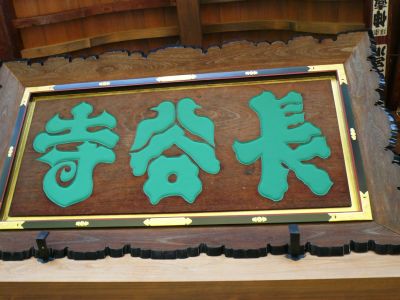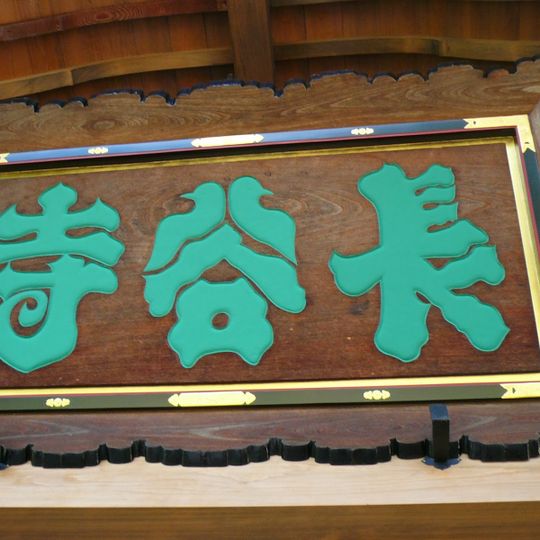
長谷寺, Buddhist temple in Nagano, Japan.
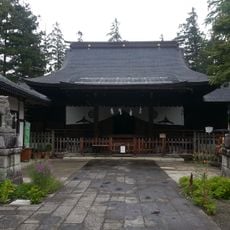
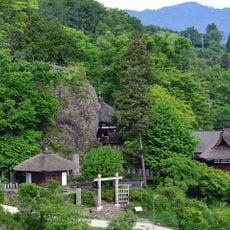
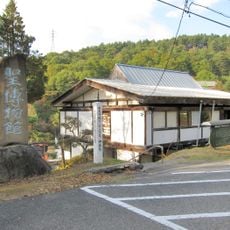
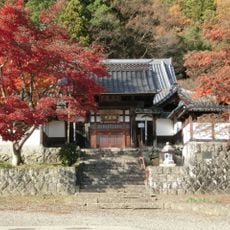
Hasedera is a Shingon Chizan school temple in the Shionoi Shiozaki district of Nagano, known as Shinano Hasedera and counted with Nara and Kamakura as one of Japan's three Hasedera. Its hillside grounds hold the Hondo, the Kannon Hall rebuilt in 1713, a Ten Kings Hall of 1805, a Niomon gate of 1776 and a bell tower gate of 1802, with a row of 33 stone Kannon figures.
According to temple tradition, the monk Hakusuke, a descendant of Emperor Ingyō, founded Hasedera in the Asuka period (629–641) after an oracle from the Amida Buddha of Zenkōji directed him to bring an Eleven-Faced Kannon statue from Hatsuse in Yamato. The exact founding year is unknown. In 1290, the regent Hōjō Sadatoki had the monk Shinkai restore the temple following a dream of Prince Kuga. A bronze sutra container dated 1151 was excavated from the hill behind the temple.
Hasedera is one of the three great Hasedera temples of Japan, along with those at Yamato and Kamakura. Every month on the 18th, the day of the Eleven-Faced Kannon, a festival is held, and on 9 August the Amagoi-sai is celebrated with thirty-three lanterns. The temple also holds o-eshiki, public explanations of a painting of the Buddha's nirvana, given beyond the 15 March date and even outside the temple.
The temple can be reached by bus or train from central Nagano with short walking distances to the entrance. Visiting in early morning hours provides a quieter experience, as midday tends to draw larger crowds.
The temple's name links it to the three great Hasedera temples of Japan, alongside those of Yamato (Nara) and Kamakura. A 1151 bronze sutra container dug from the hill behind the temple shows that a monk buried copies of the Lotus and Amitabha sutras on Haseyama that year.
The community of curious travelers
AroundUs brings together thousands of curated places, local tips, and hidden gems, enriched daily by 94,284 contributors worldwide.