Suga-jinja, A shrine located in Oyama, Tochigi Prefecture.
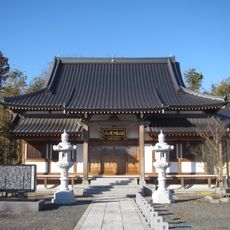
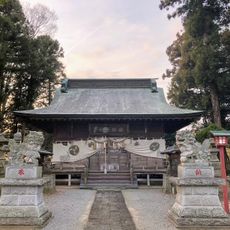
Suga-jinja is a Shinto shrine in Miyamoto-machi, Oyama, Tochigi Prefecture. Its wooden worship hall stands on a low stone base reached by three wide stone steps, with latticework panels flanking the entrance and a large white curtain bearing two black comma-shaped emblems. A row of white paper lanterns hangs under the deep roof, and a wooden fence sits at the steps.
According to shrine tradition, Fujiwara Hidesato founded it in 940 at present-day Nakakuki in Oyama; it was moved to its current site during the Hōji era (1159–1160). In the Middle Ages the Oyama clan venerated it as guardian of Oyama Castle, and the castle's alias Gion-jō comes from this shrine. Honda Masazumi, lord of Oyama Domain, relocated it early in the Edo period; in 1605 he donated 50 koku, later confirmed as 15 koku of shuin land.
The shrine's Gion Festival, held from 14 to 21 July, is its largest rite; the Edo-period text Shimotsuke Kokushi called it the foremost Gion gathering in the province. The shrine was the tutelary deity of the sixty-six villages of Oyama, and Oyama Castle's other name, Gion-jo, comes from this shrine, formerly a Gion-sha. A stone torii beside the approach, dated 1653, is the oldest in Oyama and the second oldest in Tochigi Prefecture.
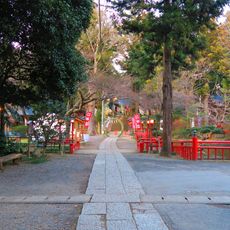
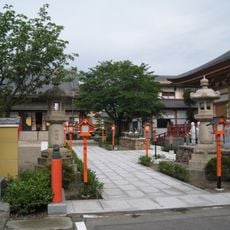
The shrine is within walking distance of central Oyama and can also be reached by car, with parking available close by. The paths on the grounds are mostly flat and well maintained, making it easy to move around and visit the different areas.
The shrine's stone torii, erected in 1653, is the oldest in Oyama and the second oldest in Tochigi Prefecture. Beside the hall stands the Nanatsu-ishi, a rock said to have come from Gion Castle and to appear in local legend. A monument honours Masaki Haruo, second son of a shrine priest who joined the Tenguto rebellion.
The community of curious travelers
AroundUs brings together thousands of curated places, local tips, and hidden gems, enriched daily by 93,665 contributors worldwide.