Azuma Kofun, Keyhole-shaped kofun in Tochigi Prefecture, Japan
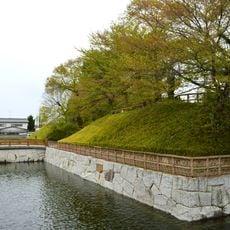
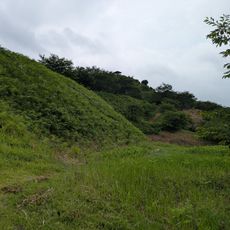
Azuma Kofun is a keyhole-shaped burial mound on the border of Tochigi city and Mibu town, Tochigi Prefecture. It is 127.85 meters long, or 162 meters including its surrounding moat, and built in two tiers on a flat platform base typical of Shimotsuke-type tumuli. A horizontal-entry stone chamber opened at the front of the mound.
Built in the latter half of the 6th century, the Azuma Kofun is the largest tumulus in Tochigi Prefecture. In the early Meiji period, the Mibu domain lord removed the entrance stone and a ceiling stone for use as garden stones at Mibu Castle. The site was designated a National Historic Site in 1970, and its stone chamber components became a Prefectural Tangible Cultural Property in 2014.
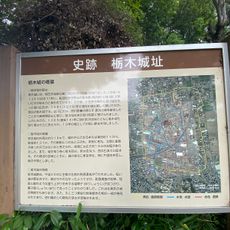
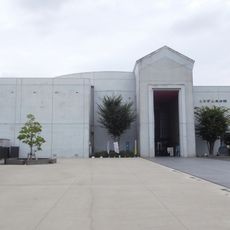
The mound's surface was covered with fukiishi revetment stones, and fragments of cylindrical and house-shaped haniwa have been recovered there. The burial chamber walls carried red pigment. The entrance stone and a ceiling stone taken to Mibu Castle in the Edo period are now shown at Mibu Castle Park, while finds from the chamber are displayed at the Shimotsuke Fudoki-ga-oka Museum.
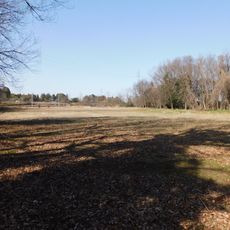
The mound straddles the boundary of Tochigi city and Mibu town, on a plateau between the Ogawa and Sugata rivers. The burial chamber was backfilled after the 2010 excavation, so only a depression marks its spot at the tip of the front section. The removed ceiling and entrance stones are displayed at Mibu Castle Site Park, and finds from the chamber at the Shimotsuke Fudoki-ga-oka Museum, about eight minutes by car from Mibu Station on the Tobu Utsunomiya Line.
The ceiling stone taken to Mibu Castle measures 2.6 m by 3.5 m and over 0.8 m thick, with U-shaped grooves cut to seat the side walls. The entrance stone is a single tuff block 2.3 m tall and 1.8 m wide, pierced with a doorway; both are displayed in Mibu Castle Site Park.
The community of curious travelers
AroundUs brings together thousands of curated places, local tips, and hidden gems, enriched daily by 94,221 contributors worldwide.