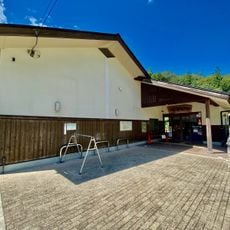
頼光寺, Buddhist temple in Kawanishi, Japan.
Raikoji is a Buddhist temple in Kawanishi featuring a traditional gate structure at its entrance and multiple buildings arranged across its grounds for various religious practices. The complex includes halls and spaces dedicated to prayer and ceremonial activities throughout the year.
Founded between 999 and 1004 by the nun Honyo-ni, wife of Minamoto no Mitsunaka, with his fourth son Genshin as founder and Mitsunaka's grandson Eiju as founding abbot, Raikoji enshrined her personal Jizo statue. It declined after the second abbot's death, was revived in 1671 by the Zen monk Mangu, became a nunnery after 1804 under the Rinzai temple Hoshōji, merged with it in 1875, regained independence and switched to the Soto school in 1990.
The temple is known as Ajisaidera, the hydrangea temple, a name it took in 1970 on the initiative of Yoshihiro Fukumoto, priest of Tada Shrine. About 400 hydrangea plants in the grounds flower together in the rainy season. Annual rites include the New Year prayer gathering from 1 to 8 January, Higan services in spring and autumn, and the Buddha's birthday festival in May.
The temple is a five-minute walk from Uneno Station on the Nose Electric Railway, whose line runs through the temple grounds. The main hall dates from 1974. About 400 hydrangea plants fill the garden and bloom together in the rainy season, drawing most visitors in June.
The temple's precinct is crossed by the Nose Electric Railway line, which runs through the grounds. The main hall was rebuilt in 1974 and houses a statue of Jurōjin, one of the seven gods of good fortune of the Hokusetsu circuit, alongside the main image of Jizō Gannō Bosatsu.
The community of curious travelers
AroundUs brings together thousands of curated places, local tips, and hidden gems, enriched daily by 94,242 contributors worldwide.