Ōtsu Shrine, Shinto shrine in Japan
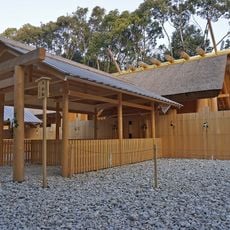
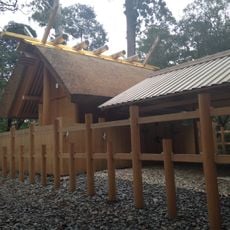
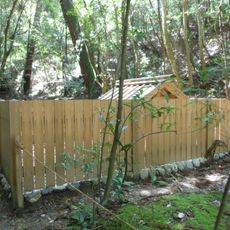
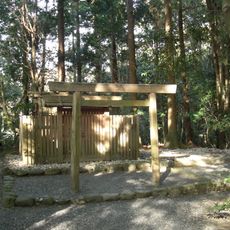
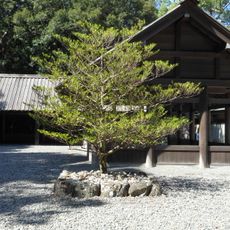
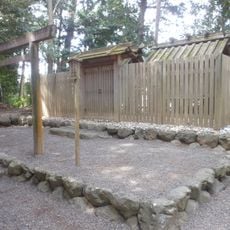
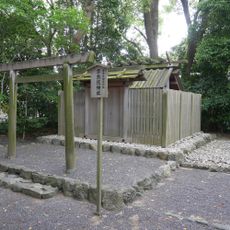
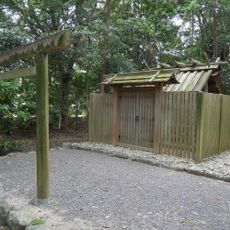
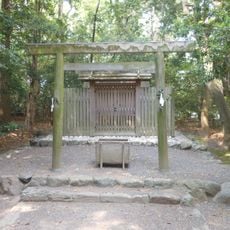
Ōtsu Shrine is a Shinto shrine in Toyokawachō built in the Shinmei-zukuri style, featuring simple wooden structures with straight lines and sloped roofs. The complex includes a main prayer hall, an inner sanctuary, several auxiliary shrines, purification basins, a stone entrance gate, protective statues, and sacred trees arranged along clean pathways.
The shrine's founding date is unknown, but it likely existed before the Heian period as a shrine under the jurisdiction of Watarai no Miya. Its rites lapsed and the shrine's whereabouts were forgotten. In 1871 Watarai Prefecture reported that Ashio Shrine in Ōnakajima was Ōtsu Shrine, a claim made without the villagers' consent; the villagers disputed it, and in August 1873 the shrine was rebuilt within the Gekū grounds. The current hall was rebuilt in March 1923.
The shrine's name, Ōtsu, links it to the old port town at the mouth of the Isuzu River and to Ōminato, whose guardian deity it was. It ranks seventh among the eight subordinate shrines (massha) of the Outer Shrine (Gekū) of Ise Jingū, and no offering box stands in its grounds.
Ōtsu Shrine stands inside the outer shrine grounds, about 50 m beyond Tarui Kuniyu Shrine along the path by the north gate. There is no offering box, so do not look for one. Beyond the shrine lies Kami no Mii Shrine, which visitors may not enter. The shrine is roughly five minutes on foot from Ise-shi Station's south exit.
Unlike the main sanctuaries of Ise Jingū, this small sessha is not subject to the twenty-yearly shikinen sengū rebuilding, so its hall is not renewed on that cycle. The present building was put up in March 1923. It stands about 50 m beyond Tsukiyomi no Kunimitama Shrine, and no offering box is placed in front of it.
The community of curious travelers
AroundUs brings together thousands of curated places, local tips, and hidden gems, enriched daily by 94,466 contributors worldwide.