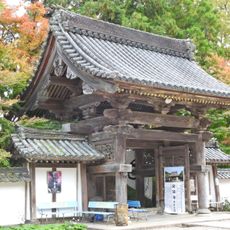
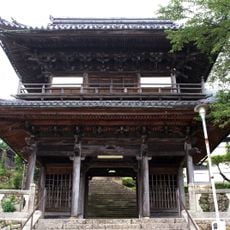
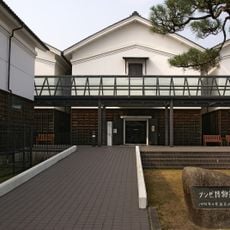
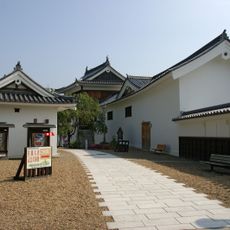
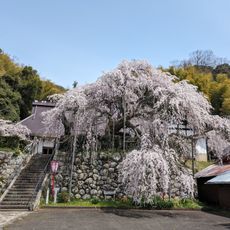
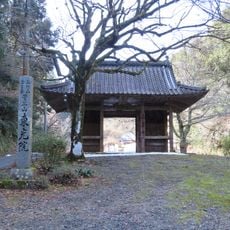
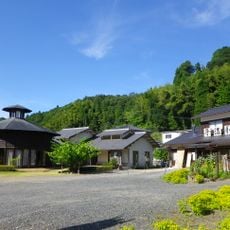
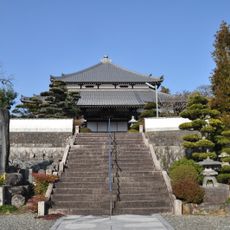
楞厳寺, Buddhist temple in Ayabe, Japan.
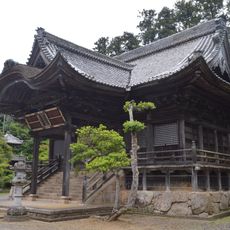
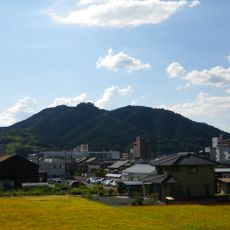
Ryōgon-ji is a Koyasan Shingon temple at the foot of Mount Engaku in Ayabe, Kyoto Prefecture. Its main hall, rebuilt between 1703 and 1708 and renovated in 2002–2003, has a coffered ceiling of 96 Akita cedar panels painted with flowers by Maruyama Keishō and his disciple Mashin. The kuri (1758) holds sliding screens by Nagai Ikka depicting crows in the four seasons.
According to temple tradition, Ryōgon-ji was founded in 732 by Rinsei Shōnin under the name Kichijō-in. A 1349 document records that its extensive estates were seized in 1337, and the temple was repeatedly destroyed by fire. The main hall was rebuilt between 1703 and 1708, then reconstructed again in 2002–2003.
The temple serves as the second station of the Kansai Flower Temple Pilgrimage and draws Buddhist practitioners who gather to meditate and participate in religious ceremonies. Visitors experience an active prayer life that continues throughout the year.
The temple stands in Tatemachi, about 15 minutes on foot east of the Tachi bus stop on the Ayabus Shiga north-south line from Ayabe Station. The sliding-screen paintings in the kuri can be seen only by reservation. By car, take Prefectural Route 9 from the Kurimachi intersection and turn left before the Toyosato post office.
The temple is nicknamed Karasu-dera, or Crow Temple, after the sliding screens in the kuri painted by Nagai Ikka, showing crows across the four seasons on 30 panels. Viewing them requires a reservation. The kuri itself was rebuilt in 1758.
The community of curious travelers
AroundUs brings together thousands of curated places, local tips, and hidden gems, enriched daily by 93,851 contributors worldwide.