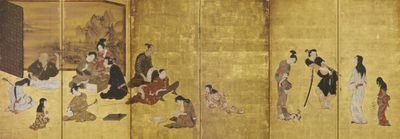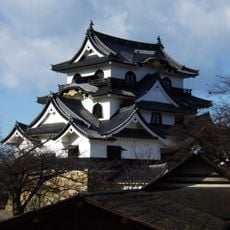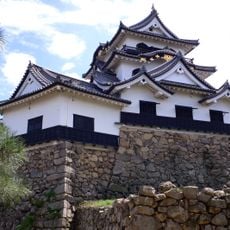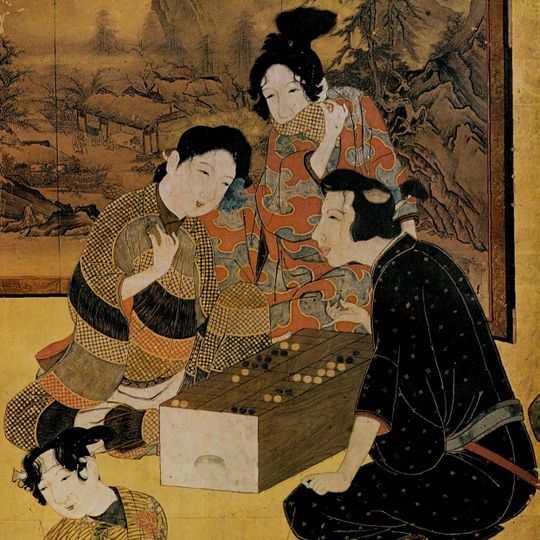
Hikone screen, National Treasure painting at Hikone Castle Museum, Japan.
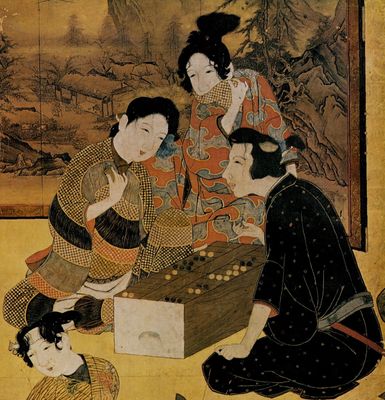
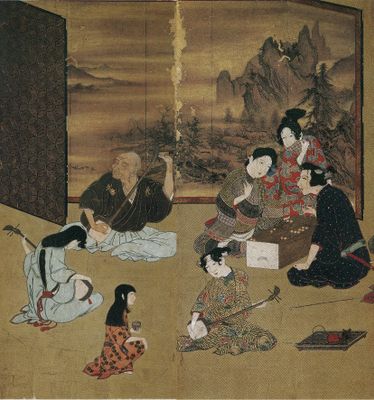
The Hikone screen is a six-panel folding artwork measuring approximately 271 cm wide and 94 cm high, painted with ink and colors on silk set against a gold-leaf background. The composition displays detailed scenes of daily life and social activities of various figures dressed in colorful garments.
The work was created during the Kan'ei era between 1624 and 1644 and long belonged to the Ii clan, rulers of Hikone Domain. It was later designated a National Treasure and entered the museum in 1997.
The screen depicts scenes from Kyoto pleasure quarters, showing people playing musical instruments, board games, and writing letters. These images offer insight into the daily activities and leisure practices of the era.
The work is displayed at Hikone Castle Museum once yearly for about one month in spring, normally from mid-April to mid-May, with exact dates announced each year. Visitors should check current opening hours and display schedules in advance to ensure access to this rare artwork.
Each figure in the painting contains remarkably detailed elements executed through fine lines and tiny dots, from individual hair strands to precise kimono patterns. This mastery of microscopic painting reveals the extraordinary craftsmanship of the artist.
The community of curious travelers
AroundUs brings together thousands of curated places, local tips, and hidden gems, enriched daily by 91,092 contributors worldwide.