Koma Family Residence, Traditional Japanese residence at Koma Shrine, Hidaka, Japan
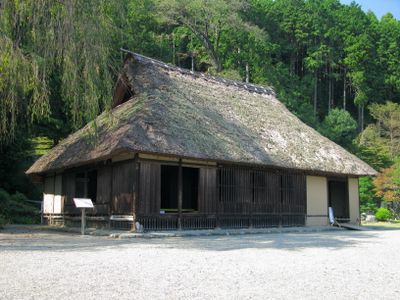
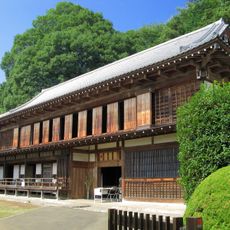
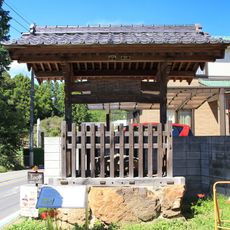
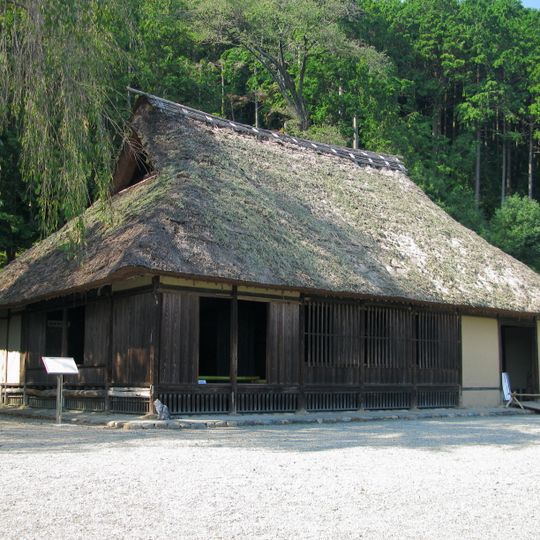
The Koma Family Residence is a traditional Japanese house with a sloped thatched roof located near Koma Shrine in Hidaka. The building contains five rooms and an earthen floor space arranged in a rectangle, constructed with Japanese cedar pillars and zelkova beams.
The house was built between 1596 and 1615 and belonged to a Shinto priest's family who maintained Koma Shrine. It gained recognition as an Important Cultural Property of Japan in 1971.
The residence reflects how a Shinto priest's family organized their daily living, with distinct spaces for cooking, sleeping, and family gatherings. The arrangement of rooms and the earthen floor area show how people used their home for both practical work and daily routines.
The house is open to visitors during daytime hours, with extended access during seasonal festivals such as Oukasai in spring. Check in advance about current visiting conditions, as it is a protected cultural property with possible restrictions.
The building was constructed without a central load-bearing pillar, instead relying on a network of slender cedar supports to distribute weight throughout the structure. This clever design allowed for flexible room arrangements and was typical of advanced building techniques of that period.
The community of curious travelers
AroundUs brings together thousands of curated places, local tips, and hidden gems, enriched daily by 91,361 contributors worldwide.