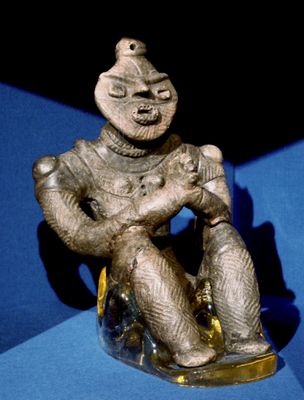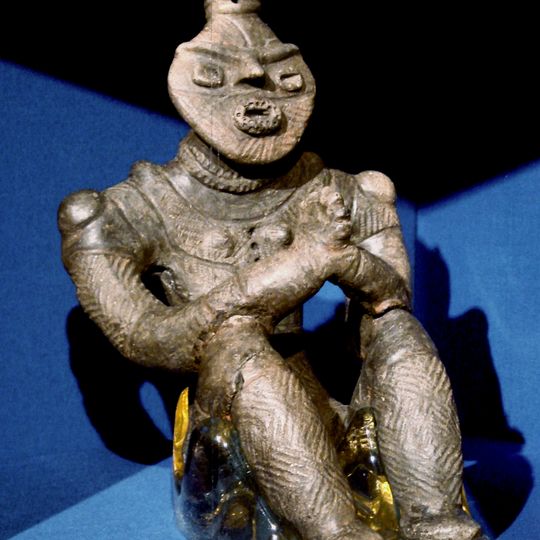
Dogū with palms pressed together, Clay figurine at Korekawa Archaeological Institution, Hachinohe, Japan.
This dogū is a female clay figure roughly 20 centimeters tall and 14 centimeters wide, shown in a seated position. Her hands are pressed tightly together, and her face and body display carefully shaped features made from applied clay strips.
Archaeologists discovered this figure during 1989 excavations at the Kazahari I Site in Hachinohe, Japan. It dates to the Jōmon period and was later designated as a National Treasure.
The figure displays red pigment and a double incised necklace carved into the clay. These elements show that people of this era valued decorated details and personal adornment.
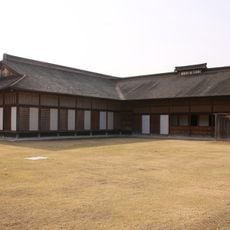
The figure is housed at the Korekawa Archaeological Institution in Hachinohe where visitors can view it. Plan your visit in advance to ensure the museum is open during your time in the area.
This is the only completely intact dogū among roughly 70 figures discovered at the same site. It also shows signs of ancient repair work on its left leg, suggesting it was valued and mended in antiquity.
The community of curious travelers
AroundUs brings together thousands of curated places, local tips, and hidden gems, enriched daily by 92,792 contributors worldwide.