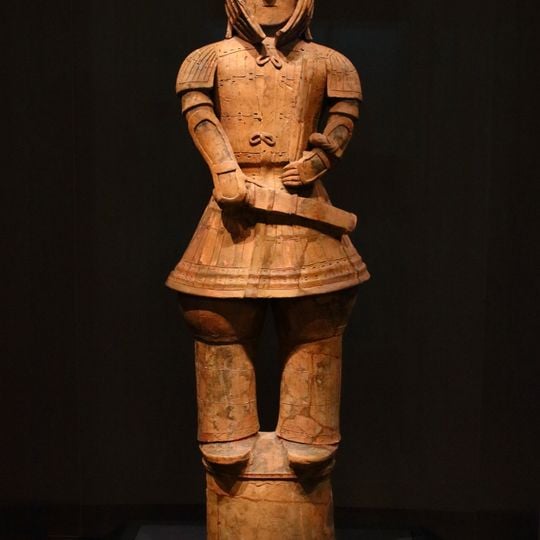
Haniwa Armored Man, Archaeological clay statue at Tokyo National Museum, Japan
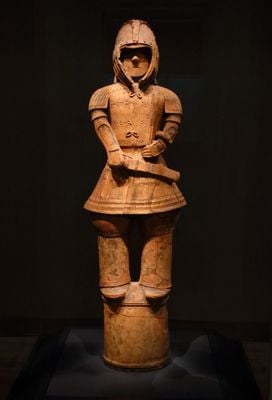
Haniwa Armored Man is a terracotta figure from the Kofun era now displayed at Tokyo National Museum in Taitō. The object depicts a warrior wearing Keiko armor and measures 130.5 centimeters tall (about 4.3 feet).
This figure was created in the 6th century during the Kofun period, when large burial mounds were decorated with many clay sculptures. Such objects were arranged around the tombs of elites and marked the social rank of the deceased.
The term haniwa refers to hollow clay figures once placed atop burial mounds to represent different roles in society. The armor and weapons shown here offer a window into how Japanese warriors equipped themselves around 1,500 years ago.
The object belongs to the permanent collection of Tokyo National Museum in Taitō district and is classified as a National Treasure of Japan. Visitors can view the figure in the Japanese archaeology galleries, where other finds from the Kofun era are also on display.
Traces of red paint remain visible on the surface and indicate its origin from the Kanto region. These pigment traces show that many haniwa were originally painted and did not simply carry the natural color of fired clay.
The community of curious travelers
AroundUs brings together thousands of curated places, local tips, and hidden gems, enriched daily by 60,000 contributors worldwide.