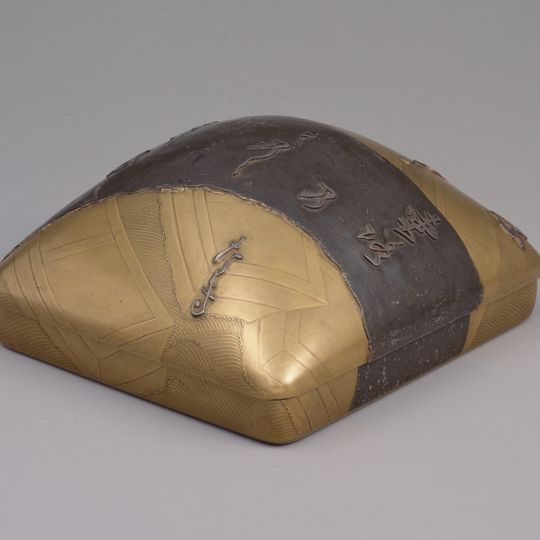
Writing Box with Pontoon Bridge, National Treasure lacquerware at Tokyo National Museum, Japan
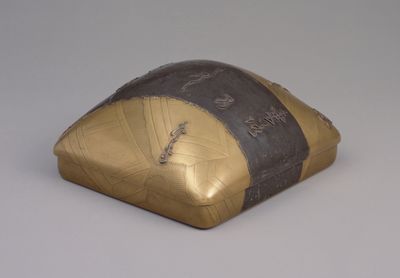
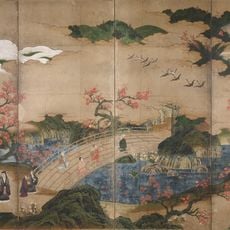
The Writing Box with Pontoon Bridge is a rectangular lacquered container held in Taitō-ku, Tokyo, made from wood, urushi, gold, silver, and lead, with a gently curved lid. Its surface depicts a bridge scene with lead boats, using the contrast between materials to create depth across the decoration.
The box was made in the early 18th century during the Edo period, when lacquer artists began combining metal inlays with urushi in increasingly inventive ways. This shift in technique shaped the style of Japanese decorative arts for generations that followed.
The surface carries verses from the Ise Monogatari, a classical Japanese tale from the 10th century. Pairing poetry with a visual scene was a refined practice in Edo-period Japan, turning writing tools into objects of literary contemplation.
The box is on display at the Tokyo National Museum in Taitō-ku, where it is kept in a controlled case to protect its materials. Lacquerware is sensitive to light and humidity, so the piece may rotate in and out of display depending on conservation needs.
The lead used for the boats on the lid makes the box noticeably heavier than most lacquerware of similar size, giving it an unexpected physical presence. This use of lead as a decorative inlay material is rare in Japanese lacquer tradition.
The community of curious travelers
AroundUs brings together thousands of curated places, local tips, and hidden gems, enriched daily by 60,000 contributors worldwide.