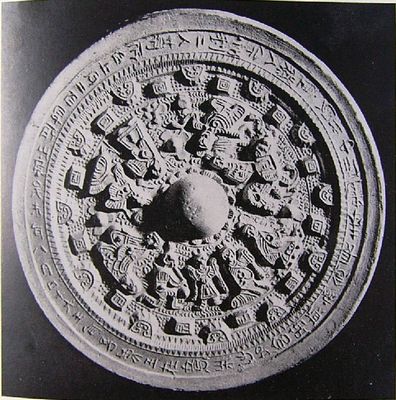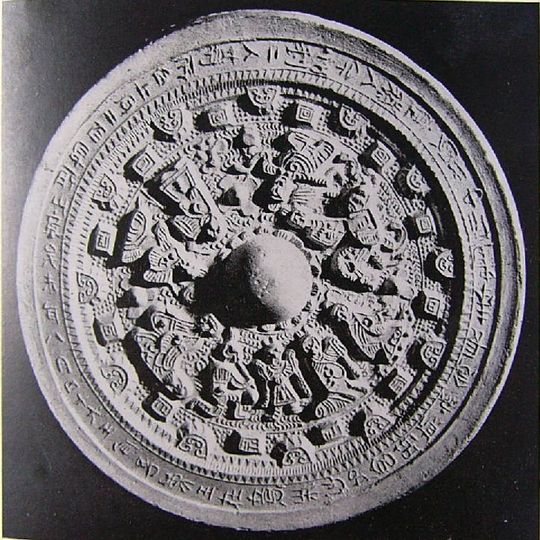
Suda Hachiman Shrine Mirror, National Treasure bronze mirror at Tokyo National Museum, Japan
The Suda Hachiman Shrine Mirror is a bronze mirror displaying nine human figures alongside two powerful divine beings, including the Lord of the East and the Queen of the West. The object measures roughly 20 centimeters across and carries 48 inscribed characters arranged counterclockwise around its surface.
The mirror originated between 443 and 503 CE, ranking among the earliest evidence of names documented in Chinese characters. The inscription identifies a ruling figure and his younger brother, revealing details about the power structures of that time.
The mirror depicts divine beings based on Chinese models, yet executed with distinctly local craftsmanship techniques. This blend of external inspiration and native skill shows how communities of that era absorbed overseas methods and made them their own.
The object is displayed in the archaeological gallery of the Tokyo National Museum, where it is shown for roughly half the year. Visitors should check ahead to confirm whether the piece is currently on view, as items rotate regularly.
The mirror's image is reversed compared to Chinese prototypes, revealing that local craftspeople had developed their own casting methods rather than simply copying techniques. This detail demonstrates how they had mastered metalworking independently.
The community of curious travelers
AroundUs brings together thousands of curated places, local tips, and hidden gems, enriched daily by 60,000 contributors worldwide.