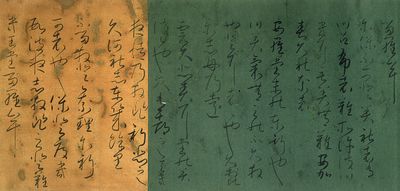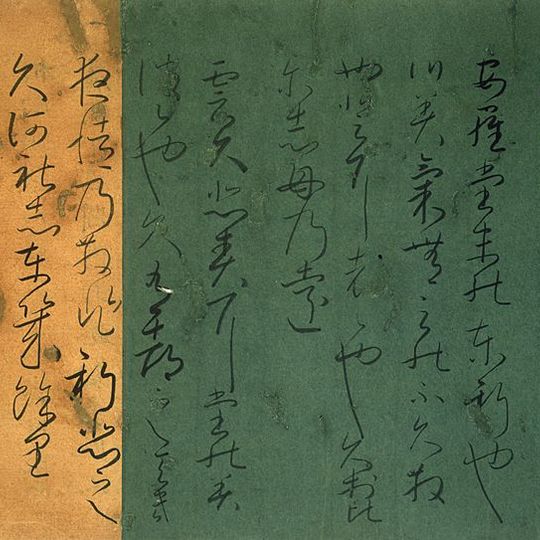
Akihagi-jō, Calligraphic masterwork at Tokyo National Museum, Japan
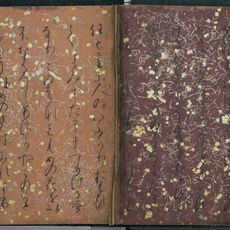
Akihagi-jō is a classical Japanese manuscript featuring 48 poems and 11 copied letters on sheets of differently dyed paper. The text is written in the flowing cursive script of that era and displays the beauty of classical Japanese writing culture.
This manuscript was created between the 10th and 11th centuries during a crucial shift from Chinese characters to Japanese Hiragana script. This period marked a pivotal moment in the development of Japanese writing traditions.
The work takes its name from the opening poem about autumn flowers and reflects the refined literary culture of the Heian period. The sheets of differently dyed paper show how aesthetics and text were closely intertwined in that era.
The manuscript is preserved at Tokyo National Museum under controlled conditions and is accessible to the public through rotating exhibitions. Visitors should check in advance when this work is on display, as it is not always exhibited.
The work includes copied letters from the famous Chinese calligrapher Wang Xizhi, revealing the exchange between Japanese and Chinese cultures. The reverse side of some pages contains notes on Chinese military strategies, adding an unexpected historical depth to the piece.
The community of curious travelers
AroundUs brings together thousands of curated places, local tips, and hidden gems, enriched daily by 92,566 contributors worldwide.