Gen'ei-bon Kokin Wakashū, Classical manuscript at Tokyo National Museum, Japan
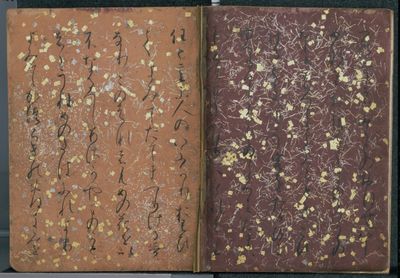
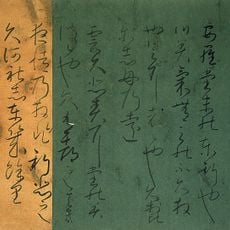
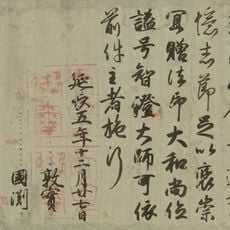
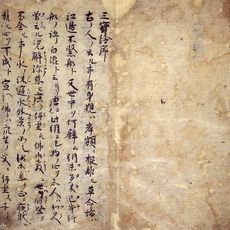
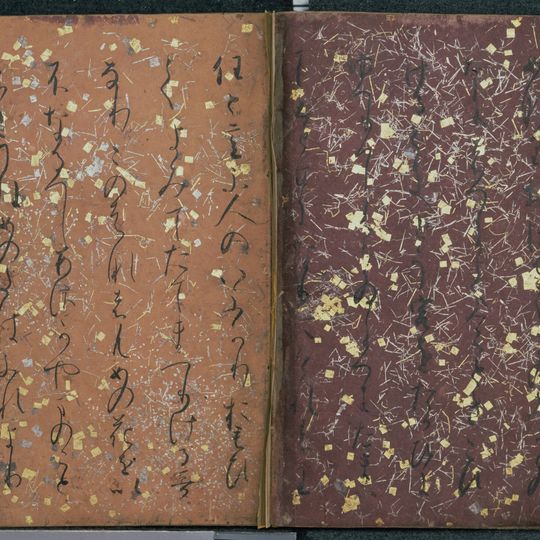
The Gen'ei-bon Kokin Wakashū is a handwritten manuscript from the Heian period, held in the Tokyo National Museum, produced on traditional Japanese washi paper. Its name refers to the Gen'ei era in which it was made and to the Kokin Wakashū, the celebrated poetry anthology it contains.
The manuscript was written in 1120 by Fujiwara no Sadazane, a calligrapher active at the Heian court. It was created at a time when copying classical texts was considered one of the highest forms of practice a courtier could pursue.
The poems inside come from the Kokin Wakashū, the first imperially commissioned anthology of Japanese poetry, long used as a model at court. Looking at the manuscript, you can see how the calligraphy itself was treated as an art form, not just a way to record words.
The manuscript is held at the Tokyo National Museum in Ueno Park, in the Taitō-ku district, one of the most accessible museum complexes in the city. Since objects like this are often shown on rotation, it is worth checking in advance whether it is currently on display.
Although the manuscript holds the status of a National Treasure of Japan, it spent centuries in the private hands of the Mitsui family, one of the country's most powerful merchant houses. Many objects of comparable status only entered public collections in the 20th century, after long periods outside any institution.
The community of curious travelers
AroundUs brings together thousands of curated places, local tips, and hidden gems, enriched daily by 91,357 contributors worldwide.