Buchholtz Palace in Supraśl, Art Nouveau palace in Supraśl, Poland
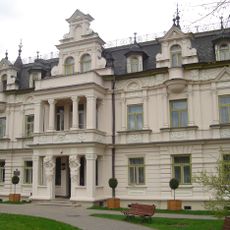
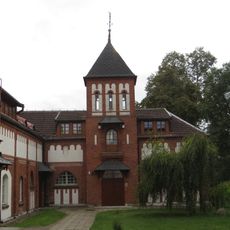
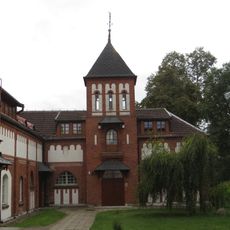
Buchholtz Palace in Supraśl is a plastered brick residence built around 1900 for Adolf Gustav Buchholtz and Adela Maria, with an L-shaped plan: a two-storey main block and a side wing joined by a four-storey tower under a hipped roof. A balcony portico with paired pilasters and columns fronts the main axis, and the facades carry Art Nouveau floral ornament with apple branches, sunflowers, roses and poppies.
Adolf Gustav Buchholtz and his wife Adela Maria, daughter of Łódź industrialist Karol Wilhelm Scheibler, moved from Łódź to Supraśl to run a textile business closer to Russian markets and built the palace around 1900. It began as a small residence near their factory, later enlarged with a west wing and tower. After World War II it housed a finance technical school, and in 1959 it was transferred to the Art School.
The palace functions as the Secondary School of Art, combining educational purposes with the preservation of historical architecture and artistic heritage.
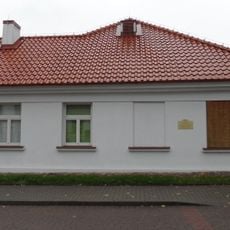
The palace now houses the State Secondary School of Fine Arts, so interiors are generally seen only from the outside during school hours. The gatehouse, standing unused, and the former stable block, now used by weavers and as a gym, lie west of the palace. The 1978 conservation decision and later EU-funded work restored the facade and parts of the polychrome.
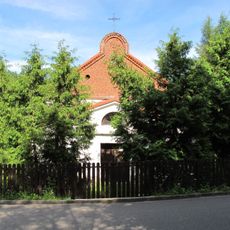
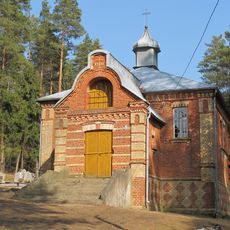
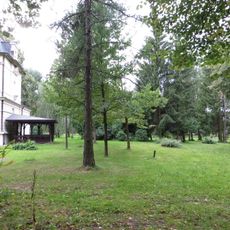
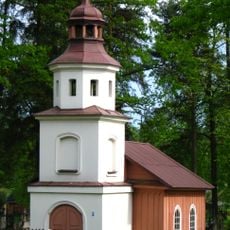
The palace stands within a palace-and-park complex, and the coach house west of the palace carries a date on its tower weathervane: 1903. Its tower roof is covered in copper sheet laid in a scale pattern, a detail easy to miss from the main path.
The community of curious travelers
AroundUs brings together thousands of curated places, local tips, and hidden gems, enriched daily by 93,127 contributors worldwide.