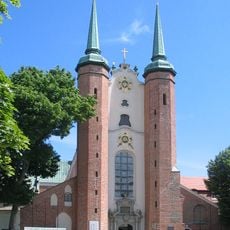
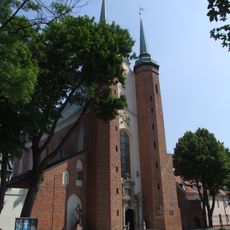
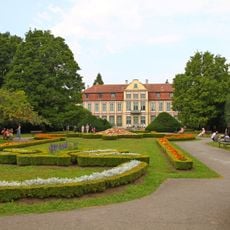
Uphagen manor house in Gdańsk, 19th-century manor house in Wrzeszcz district, Gdańsk, Poland.
The Uphagen manor house stands at Grunwaldzka Avenue and displays architectural features typical of early 19th-century residential design in northern Poland. The building has two stories with decorative brickwork and classical details commonly found in homes built for wealthy merchant families of that era.
The estate belonged to Johann Uphagen from 1790; the building was destroyed during the 1813 siege of Gdańsk. In 1814 his nephew Johann Carl Ernst Uphagen rebuilt it as a classicist manor, probably on the ruins. The city bought the land in 1897 for 250,000 German marks, and after World War II a Swedish consulate occupied the house.
From 3 April 1976 to 19 May 2001 the manor was Gdańsk's Pałac Ślubów, the civil wedding palace. The first couple married inside were Beata Wesołowska and Leszek Tomaszewski, an athlete of Spójnia Gdańsk. Since 5 August 2003 it has housed the Regional Centre for Information and Support of Non-Governmental Organisations.
The manor stands at Aleja Grunwaldzka 5 in Wrzeszcz, a short walk from the Politechnika Gdańska campus. Since 5 August 2003 it has housed the Regional Centre for Information and Support of NGOs, so it is a working office building rather than a museum. The renovation finished in 2020, and the restored house was opened on 18 August that year.
After the Second World War the manor housed Sweden's consulate; no Danish consulate is documented. From 3 April 1976 to 19 May 2001 it served as the city's wedding palace, and the first couple married inside were Beata Wesołowska and Leszek Tomaszewski, an athlete of Spójnia Gdańsk.
The community of curious travelers
AroundUs brings together thousands of curated places, local tips, and hidden gems, enriched daily by 93,299 contributors worldwide.