Ulpia Traiana Sarmizegetusa, Ancient Roman archaeological site in Sarmizegetusa, Romania.
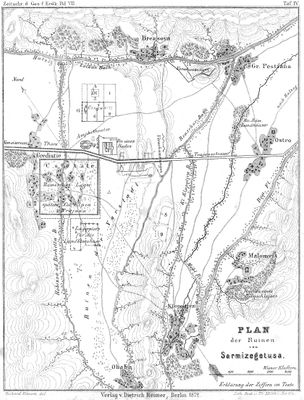
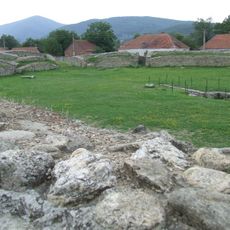
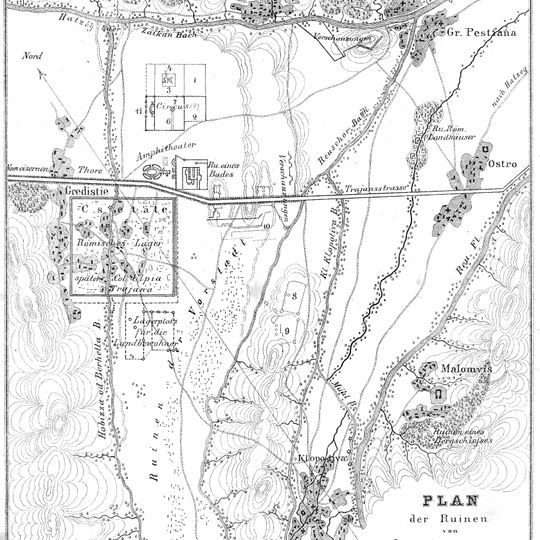
Ulpia Traiana Sarmizegetusa is an ancient Roman site in Sarmizegetusa, Romania, featuring stone walls and remains of public structures. The ruins spread across open ground where you can see temple foundations, column stumps, and the outline of an amphitheater.
The settlement was founded after 106 CE as the capital of province Dacia under Emperor Trajan and later gained colonial status under Hadrian. It was abandoned in the 3rd century when Roman administration withdrew from the region.
The colonial layout follows a grid pattern with colonnaded streets that create an orderly network across the former city center. Water channels and paved paths link different sections, letting visitors trace how Roman urban planning organized daily movement and commerce.
The site is accessible during daylight and sits in open countryside without shade, so bring sun protection and sturdy shoes. Some areas undergo restoration, meaning barriers occasionally limit access to certain sections.
Fragments of Roman reliefs and inscriptions appear in walls and gardens of nearby houses, where residents have used them as building material for centuries. Local wells still show ancient stone blocks with traces of Roman chisel work.
The community of curious travelers
AroundUs brings together thousands of curated places, local tips, and hidden gems, enriched daily by 91,845 contributors worldwide.