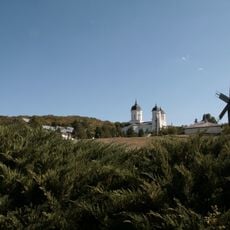
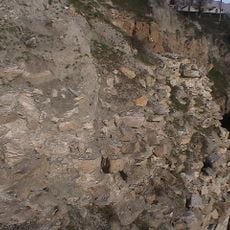
Castrum Noviodunum, Roman military fort along Danube River in Isaccea, Romania.
Castrum Noviodunum lies on the Danube bank 2 km east of Isaccea, where a legionary fortress and naval port enclosed about 9 ha in two walled enclosures. The southern curtain wall, almost 3 m wide, links a fan-shaped corner tower, a U-shaped tower and the Large Tower, one of the largest ever built by the Romans, over an 80 m stretch.
The fort began as a Celtic settlement and was later developed by the Romans starting in the 1st century into a military installation. It remained an important outpost for controlling the lower Danube region until Ottoman forces took it in the 15th century.
The name Noviodunum is Celtic in origin, and from the 10th century the site appears in cartographic documents as Isaccea. Ancient and Byzantine authors including Ptolemy, Ammianus Marcellinus and Procopius mention the place. In 1340 the Golden Horde held its tamga assembly here, and Ottoman armies later crossed at this Danube point.
The site lies 2 km east of Isaccea, on the Danube bank in Tulcea County. The walled area covers about 9 ha in two enclosures, with a second civil settlement of at least 7 ha inside three earth ramparts. The southern curtain wall, almost 3 m wide, links a fan-shaped corner tower, a U-shaped tower and the Large Tower across 80 m. The ground is uneven; wear sturdy shoes.
The site's name is Celtic in origin, and the Roman fort was preceded by a settlement where the Persian king Darius I built a pontoon bridge across the Danube in 514 BC during his campaign against the Scythians. Greek traders from the Pontic cities also maintained a trading post here.
The community of curious travelers
AroundUs brings together thousands of curated places, local tips, and hidden gems, enriched daily by 94,714 contributors worldwide.