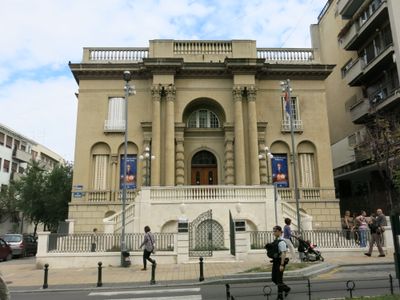
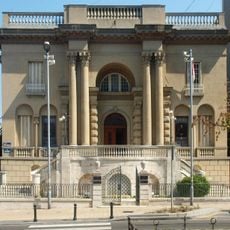
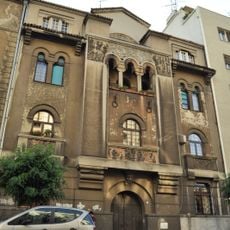
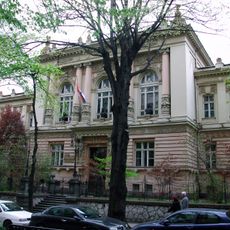
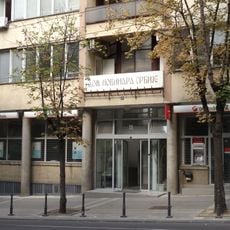
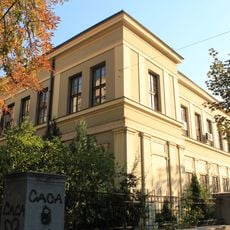
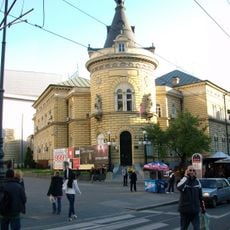
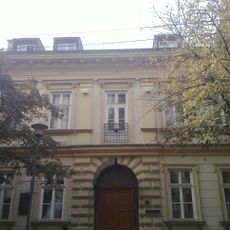
Genčić`s family house, Residential palace in Belgrade, Serbia.
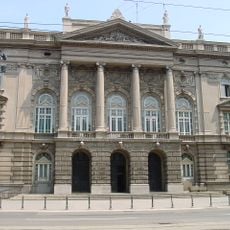
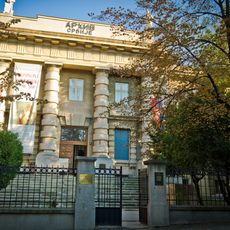
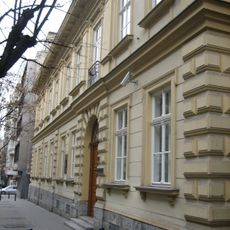
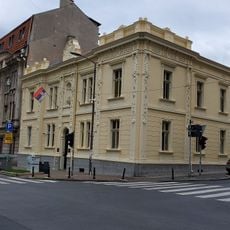
Genčić's family house at 51 Krunska Street is a cubic villa with a facade dominated by a triumphal-arch entrance and pairs of double columns with Ionic capitals. Dragiša Brašovan designed it between 1927 and 1929, giving all facades equal treatment. The ground floor held a dining room, kitchen and salon around a central hall; bedrooms and a study were upstairs.
Built in 1929 for industrialist Đorđe Genčić, the house was designed by architect Dragiša Brašovan. After World War II, the building was repurposed and converted into a museum in 1952.
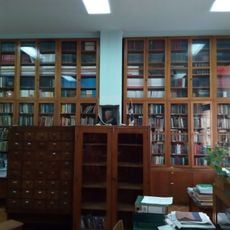
The house was a private family residence until it was confiscated by the communist government after World War II. In February 1940, the Institute for Italian Culture opened there, with a public library, inaugurated by Italian education minister Giuseppe Bottai. Since 1952 it has housed the Nikola Tesla Museum, which keeps Tesla's scholarly and personal legacy.
The house stands at 51 Krunska Street, on the corner with Prota Mateja Street. It has housed the Nikola Tesla Museum since 1952, so access is through the museum rather than as a private residence; the historic rooms are not open to roam freely.
The building's layout reveals two distinct ways it functioned: the ground floor was designed for social gatherings with a dining room and salon, while the upper floors served as private living and working spaces. This separation reflected how wealthy households organized their daily lives in the period.
The community of curious travelers
AroundUs brings together thousands of curated places, local tips, and hidden gems, enriched daily by 94,456 contributors worldwide.