Worshipful Company of Goldsmiths, one of the Great Twelve Livery Companies of the City of London
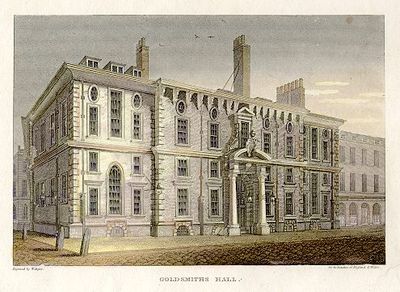
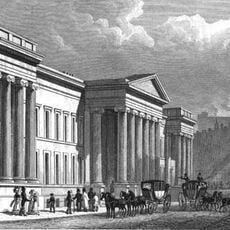
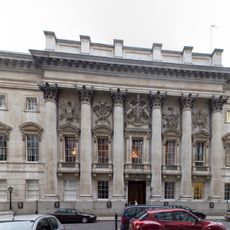
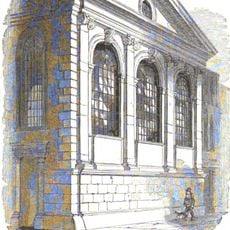
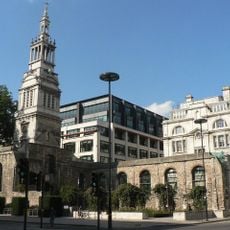
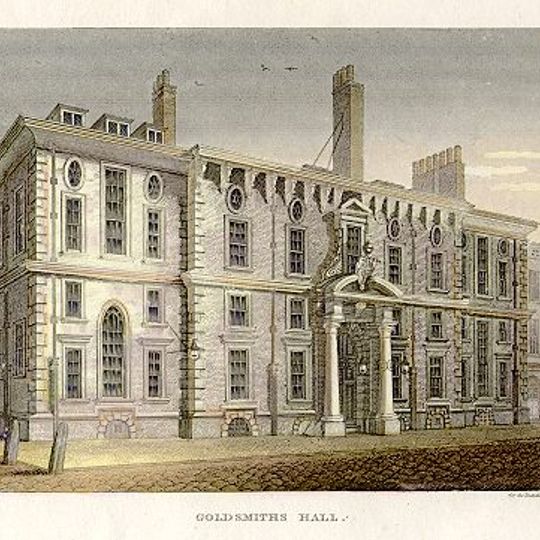
The Worshipful Company of Goldsmiths is a livery guild based in a grand stone building at the corner of Foster Lane and Gresham Street in London. Designed by architect Philip Hardwick and completed in 1835, it features the Livery Hall with crystal chandeliers and painted British monarchs, the Staircase Hall with marble walls and Samuel Nixon's sculptures of the four seasons, and the Court Room displaying 18th-century furnishings alongside a Roman-era altar discovered during the hall's construction.
The guild received its royal charter in 1327, beginning as an organization of goldsmiths and silversmiths dedicated to regulating craft quality. In 1363, goldsmiths and silversmiths were mandated to mark their work with hallmarks, establishing the system still used today for verifying the purity of precious metals.
The Company takes its name from its patron saint, St Dunstan, whose gilded statue stands in the Staircase Hall. The leopard head symbols displayed throughout the Court Room represent the hallmark that has identified quality goldwork for centuries.
The building is located in central London but is not open to the public on a regular basis, though special open days are held throughout the year for visitors. The Goldsmiths' Fair, typically held in September or October, offers one of the best opportunities to see the interior and learn about the work of contemporary craftspeople.
The Drawing Room has been featured in television and film productions including the series Bridgerton and scenes from The Crown due to its authentic period appearance with 18th-century tapestries. During a recent renovation, workers discovered a mysterious orange object that had been covered up, possibly hidden away in the past due to its controversial design.
The community of curious travelers
AroundUs brings together thousands of curated places, local tips, and hidden gems, enriched daily by 92,618 contributors worldwide.