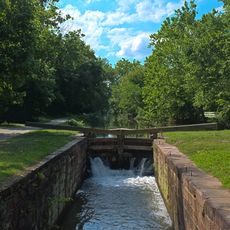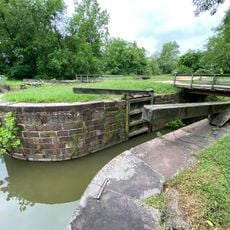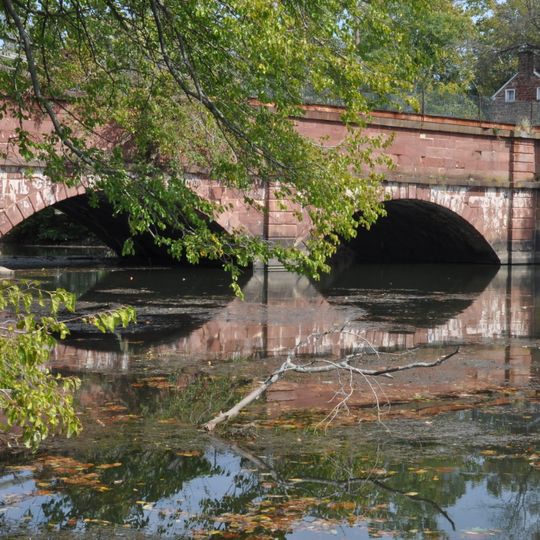
Seneca Aqueduct, Naviduct at Chesapeake & Ohio Canal, Maryland, US.
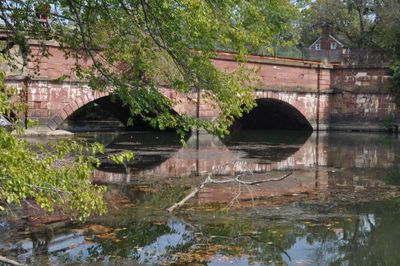
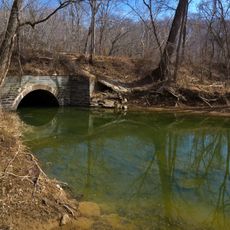
The Seneca Aqueduct is a navigation structure that carries the Chesapeake & Ohio Canal over Seneca Creek using three red sandstone arches. An adjacent lock chamber, known as Riley's Lock, manages water levels to keep the canal's flow consistent for boat passage.
Built between 1829 and 1832, this was the first in a series of aqueducts constructed along the canal corridor. It represented an early effort to create a major transportation route that would carry commerce across the region.
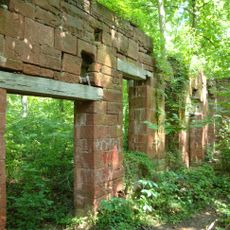
The structure shows how people used engineering to solve the practical problem of moving canal boats across a river without breaking their journey. Local stone from nearby quarries became part of a larger transportation network that shaped the region.
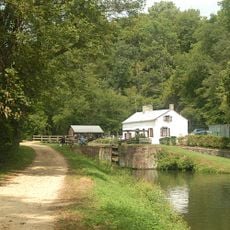
The structure sits along a towpath that is accessible to walkers and offers views of both the aqueduct and the creek below. The area features stone surfaces and some uneven ground, so sturdy shoes are recommended when exploring the site.
A major flood in 1971 damaged one of the three arches, which led to repairs using steel reinforcement. Afterward, a pedestrian bridge was added to allow visitors to safely reach and view the structure from different angles.
The community of curious travelers
AroundUs brings together thousands of curated places, local tips, and hidden gems, enriched daily by 91,880 contributors worldwide.