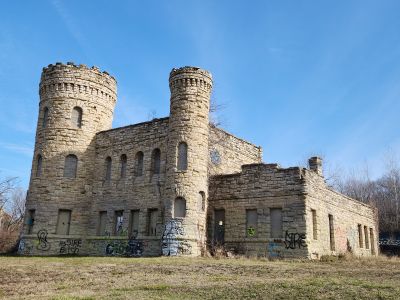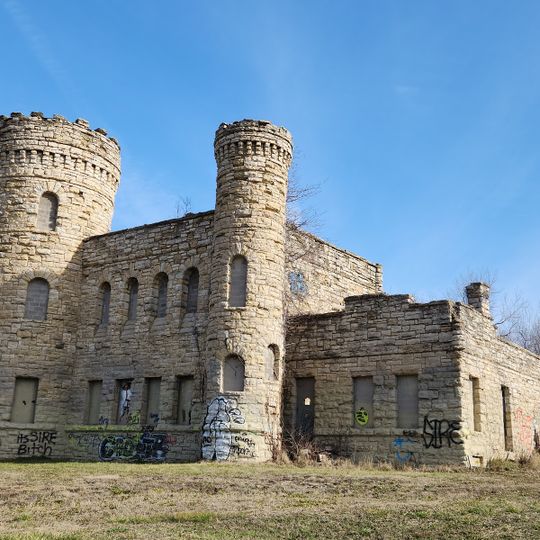
City workhouse castle, Municipal prison from 1897 in Kansas City, United States.
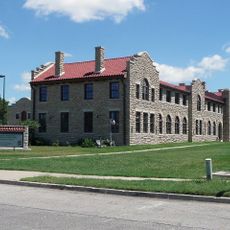
The structure features yellow limestone construction with Romanesque Revival architecture, including castellated towers and heavy masonry walls. Multiple floors with reinforced concrete construction remain, while narrow window openings and heavy door frames reveal its original security function. The building now stands in deteriorated condition on roughly 17 acres (7 hectares) of land.
Kansas City commissioned the jail in 1897 for 25,700 dollars, with prisoners from the previous detention facility quarrying yellow limestone from natural deposits for construction materials. The complex operated until the 1960s before authorities abandoned it. The structure has deteriorated since closure and was added to endangered building registers in 2018.
The facility reflects a shift in American corrections during the 1890s, when cities began implementing work programs and educational opportunities for prisoners to support their reintegration into society. The building served as a municipal jail for over six decades until city authorities established new modern detention facilities elsewhere.
The site stands at 2001 Vine Street, near the historic 18th and Vine District known for its jazz heritage. The ruins remain closed to public access and should only be viewed from outside. Visitors can photograph the structure from adjacent streets but must not enter the property for safety reasons.
Prisoners constructed their own place of detention by quarrying yellow limestone from nearby deposits and raising the heavy walls themselves. Women occupied the second floor and manufactured uniforms there, while men performed labor for city departments before transfer to Municipal Farm outside the city.
The community of curious travelers
AroundUs brings together thousands of curated places, local tips, and hidden gems, enriched daily by 92,887 contributors worldwide.