Hohenzollern Bridge, Steel railway footbridge in Altstadt-Nord, Germany
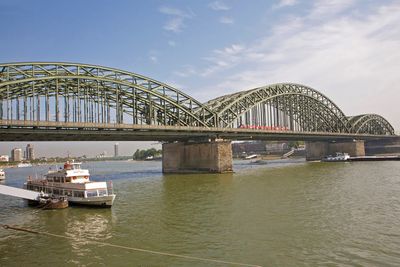
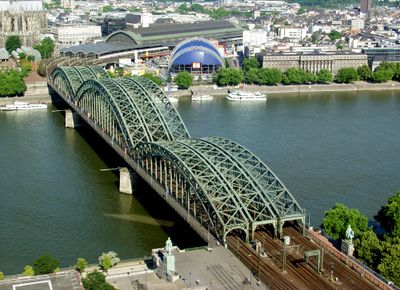
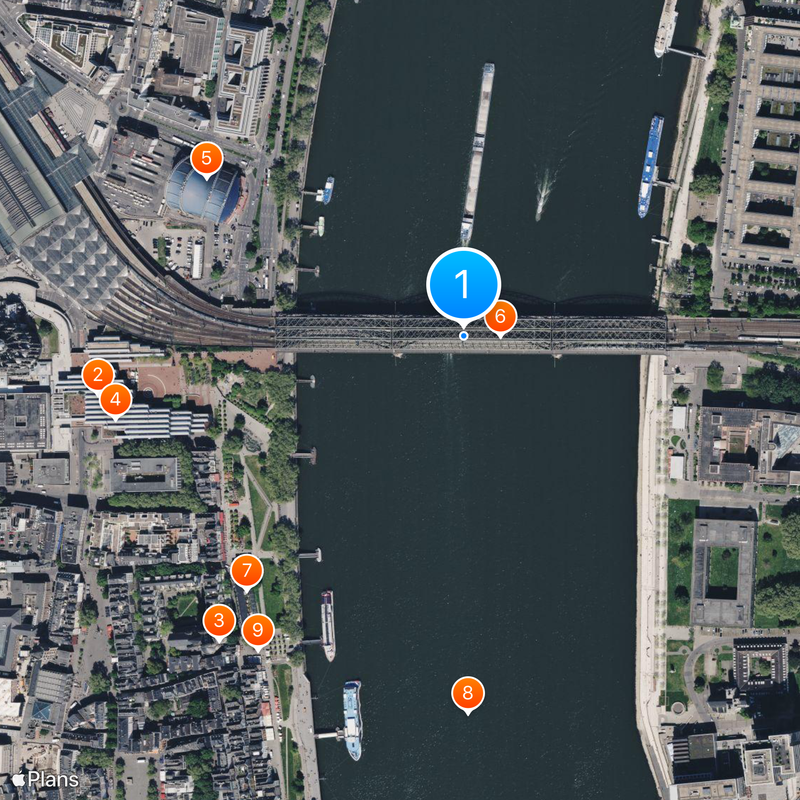
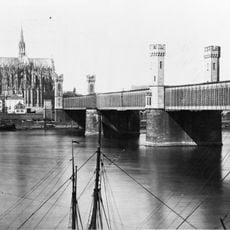
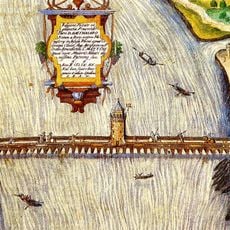
Hohenzollern Bridge is a steel railway crossing in Altstadt-Nord and Deutz, Germany, spanning the Rhine over a distance of roughly 409 meters (1,342 feet). The six parallel tracks connect the main station to the opposite bank, while wide footpaths on both sides accompany the rail traffic.
Opened in 1911, the original construction was demolished by German military forces in March 1945 to delay the Allied advance. Reconstruction began in 1946, and the pedestrian passage reopened just three years later, before full train service resumed.
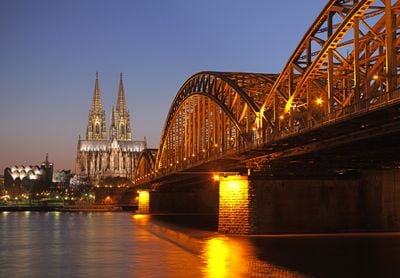
The structure takes its name from the Prussian royal family, whose members appear as bronze equestrian statues at both ends. Walkers pass these four monumental figures and experience views of the cathedral from close range, while trains run beneath their feet.
The footpaths remain open around the clock and offer direct access to the city center and the riverbank. Anyone wishing to visit the cathedral or walk through the old town core will find the shortest route from the station here.
Visitors have attached love padlocks to the railings since 2008, and an estimated half a million metal locks now shape the appearance of the crossing. The city tolerates the added weight of several tons without compromising the structural integrity.
The community of curious travelers
AroundUs brings together thousands of curated places, local tips, and hidden gems, enriched daily by 60,000 contributors worldwide.