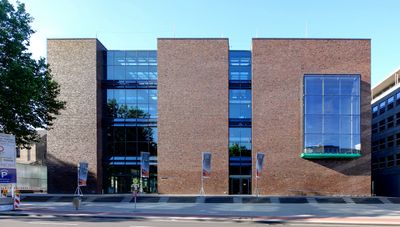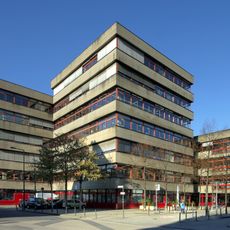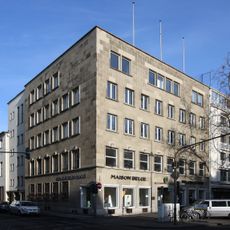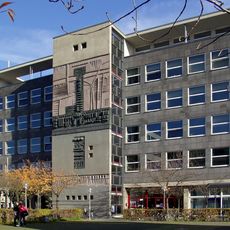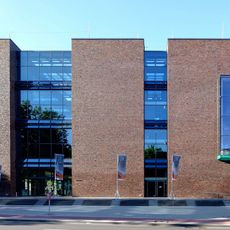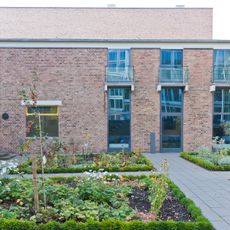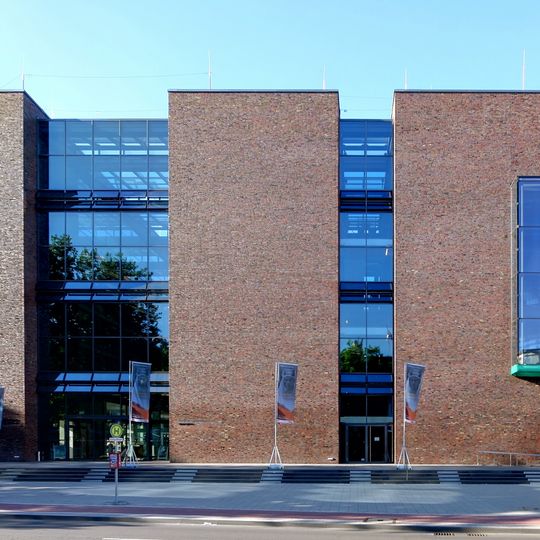
Rautenstrauch-Joest Museum, Ethnographic museum in Altstadt-Süd, Cologne, Germany.
The Rautenstrauch-Joest Museum is an ethnographic museum spread across three floors with exhibits about human cultures, artworks, ways of living, death rituals, and religions from different continents. The collections show everyday objects, crafts, and religious items side by side to illustrate how these aspects of human life connect to one another.
The museum was founded in 1901 and is based on a collection of about 3,500 objects gathered by ethnographer Wilhelm Joest and inherited by his sister Adele Rautenstrauch. This inheritance became the foundation for one of Europe's most important ethnographic museums.
The museum displays objects from different cultures around the world, showing how people live and shape their traditions. A large rice barn from Sulawesi stands in the central lobby and provides a direct sense of living spaces from Indonesia.
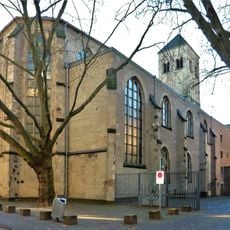
The museum is located at Cäcilienstrasse 29-33 and offers combined tickets with Museum Schnütgen. It stays open until 20:00 on Thursdays, which allows for longer visits on those evenings.
In 2018, the museum demonstrated responsibility toward other cultures by returning a tattooed Maori skull to New Zealand after 110 years in its collection. This decision showed a new approach to handling ethnographic collections.
The community of curious travelers
AroundUs brings together thousands of curated places, local tips, and hidden gems, enriched daily by 91,339 contributors worldwide.