Schnütgen Museum, Religious art museum in Kulturquartier, Cologne, Germany.
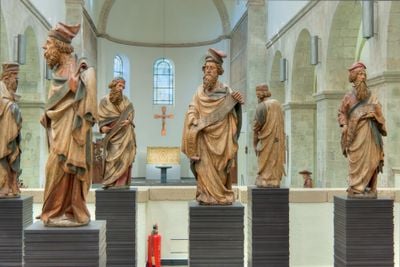
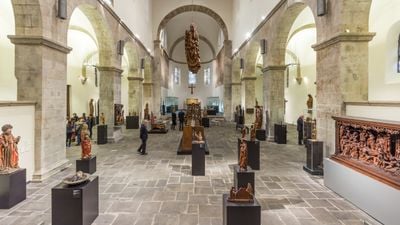
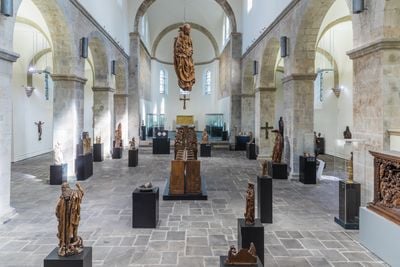
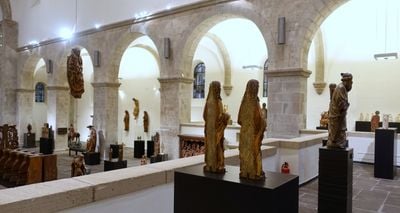
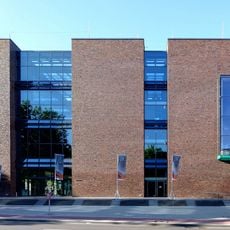
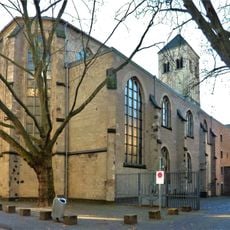
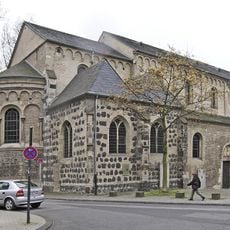
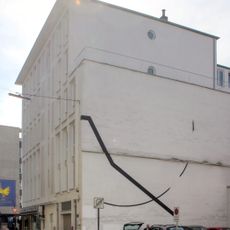
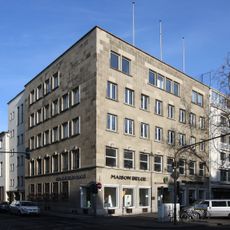
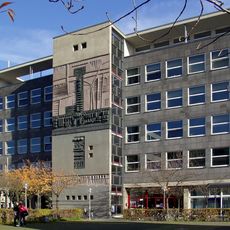
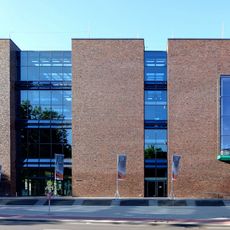
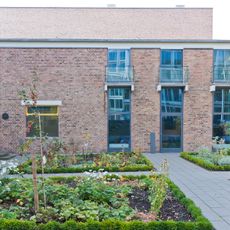
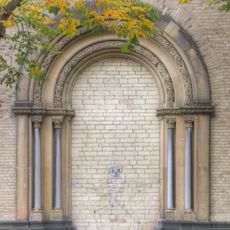
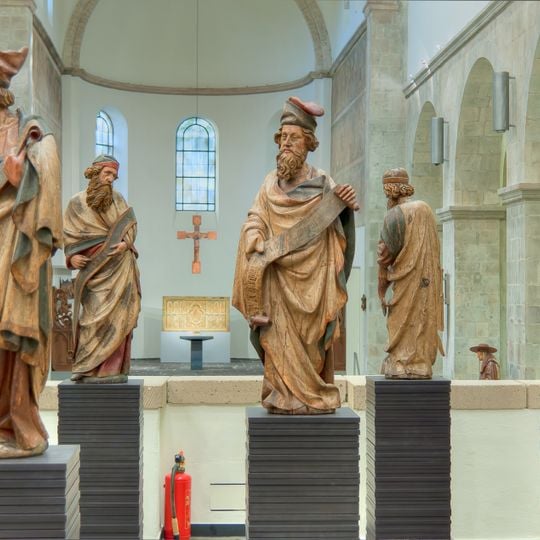
The Schnütgen Museum occupies the Romanesque church of St. Cäcilien, built between 1130 and 1160 and decorated with murals from around 1300. A 1950s annex by Karl Band and a 2010 building in the Kulturquartier add gallery space. Inside, a suspended wooden sculpture hangs above a stone floor, with carved figures displayed on plinths between massive pillars.
Alexander Schnütgen, a Cologne priest, spent decades collecting medieval church art and donated his collection to the city in the early 20th century. The Church of St. Cecilia, which was no longer used for worship at the time, was then converted to serve as the museum building.
The museum is named after Alexander Schnütgen, a Cologne cathedral canon whose collection of Christian sacred art was donated to the city in 1906. St. Cäcilien still serves as a church: services are held there on St Cecilia's Day, 22 November, and at Christmas, so the building keeps a double role as museum and place of worship.
The museum is in the Arts Quarter, close to the Old Town, and easy to reach on foot from the city center. It shares the area with other museums, so a single visit can take in more than one in a day.
The so-called Comb of St Heribert is a 9th-century ivory liturgical comb, named after the Cologne archbishop venerated at Deutz. The museum also keeps the Harrach Diptych, a Carolingian ivory of about 810 on loan from the Ludwig collection, and a single leaf of the English St Albans Psalter.
The community of curious travelers
AroundUs brings together thousands of curated places, local tips, and hidden gems, enriched daily by 93,601 contributors worldwide.