Ōfune Site, Archaeological site in Hakodate, Japan
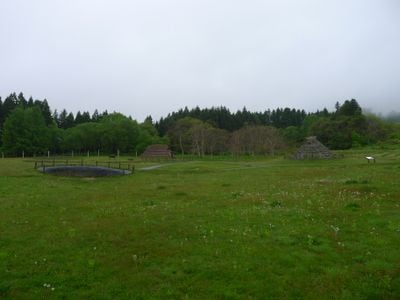
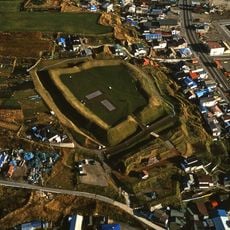
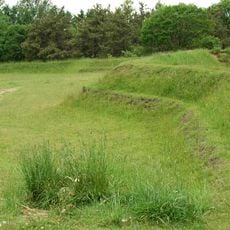
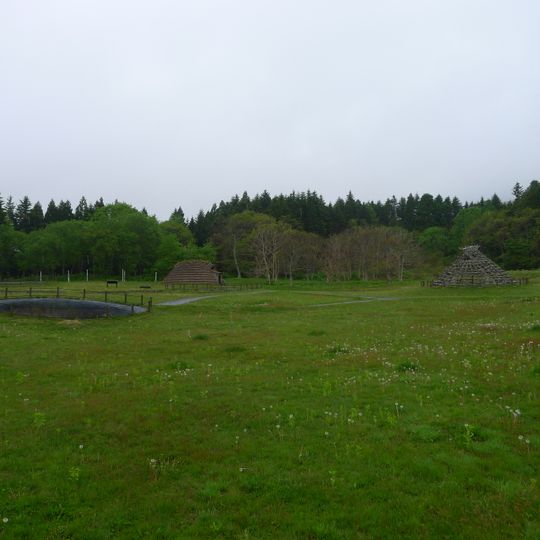
The Ōfune Site is an archaeological location on a coastal terrace in Hakodate featuring deep pit dwellings that extend 8 to 11 meters across and reach depths of up to 2.4 meters. The site reveals a pattern of multiple residential structures arranged across the landscape, indicating a settled community.
The site dates to the middle Jomon period, roughly 5,200 to 4,000 years ago, representing early settlement forms in the region. Systematic excavations starting in 1996 uncovered extensive remains that document how hunter-gatherer communities lived during this era.
The site contains more than 200,000 artifacts including whale vertebrae, pottery, stone tools, and burnt chestnut remains, indicating advanced hunting and gathering practices.
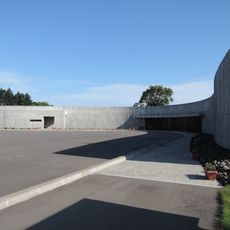
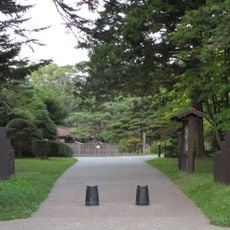
The site is accessible on foot, with most visitors arriving by bus and walking up to the location. Vehicles can be left in a parking area at the base, while the archaeological site itself is explored on foot.
Excavations have revealed over 200,000 objects including whale vertebrae, pottery, stone tools, and charred chestnuts, showing how people drew resources from both land and sea. These finds reveal a way of life deeply dependent on the abundant natural resources of the coastal region.
The community of curious travelers
AroundUs brings together thousands of curated places, local tips, and hidden gems, enriched daily by 60,000 contributors worldwide.