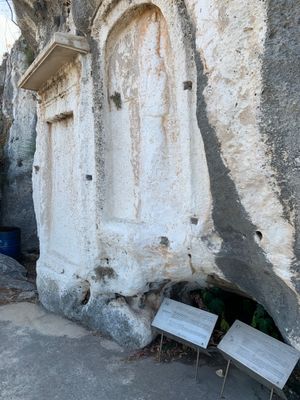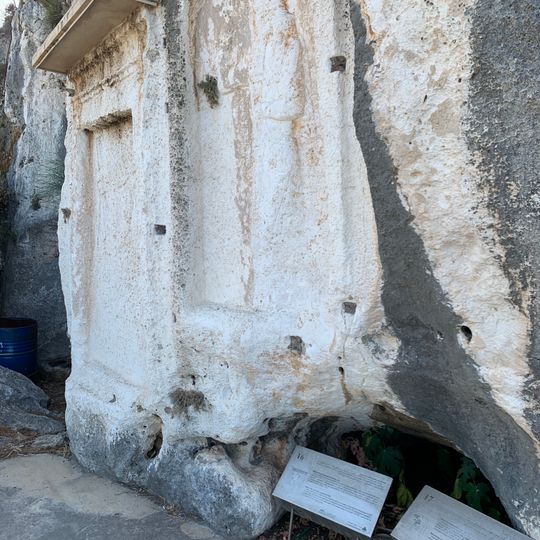
Commemorative stelae of Nahr el-Kalb, Ancient commemorative stones at Nahr el-Kalb, Lebanon.
The Commemorative stelae of Nahr el-Kalb are over twenty inscribed limestone stones positioned along the Dog River estuary, featuring texts in multiple ancient and modern languages. These stones sit near the river crossing and display the diversity of scripts and languages from different historical periods.
The earliest inscription comes from Pharaoh Ramesses II, followed later by Neo-Assyrian, Neo-Babylonian, Roman, Greek, Arabic, and French colonial carvings. This chronological sequence shows how successive rulers used this strategic river crossing location to assert their claims.
The inscriptions record power shifts and important events from Egyptian, Mesopotamian, European, and Lebanese rulers across many centuries. They show how different cultures viewed this location as significant for their own histories.
The stones line the coastal highway north of Beirut and are visible from designated viewing areas near the river crossing. Access is straightforward, but watch for road traffic and plan a visit during daylight for the best visibility of the inscriptions.
Each inscription represents a different ruling period, together creating a continuous historical record from ancient Egypt to Lebanese independence. This unbroken sequence of accounts makes this site a rare example of continuous observation of a strategic route through nearly three millennia.
The community of curious travelers
AroundUs brings together thousands of curated places, local tips, and hidden gems, enriched daily by 60,000 contributors worldwide.