Ksar Akil, Paleolithic site in Antelias, Lebanon.
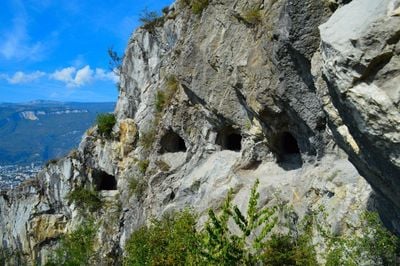
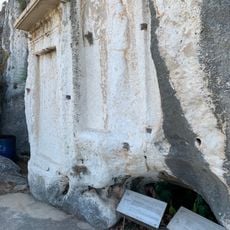
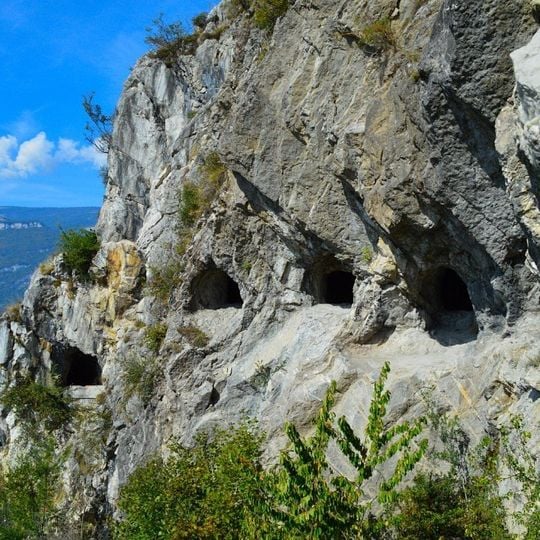
Ksar Akil is a large rock shelter beneath a steep limestone cliff in the Wadi Antelias, about 800 m west of the Antelias spring and 10 km northeast of Beirut. Its excavated deposits reach 23.6 m deep, one of the longest Paleolithic flint sequences in the Middle East. The cliff face holds several dark hollows, and sparse vegetation grows at its base.
Godefroy Zumoffen first noted the rock shelter in 1900, and A. E. Day studied it in 1926. Systematic excavations by J. G. Doherty and J. F. Ewing in 1937–1938 and 1947–1948 uncovered a 23.6 m deposit; Jacques Tixier worked there from 1969 until the Lebanese Civil War halted research. In 1964 the Department of Antiquities saved the site from burial under gravel-works sludge.
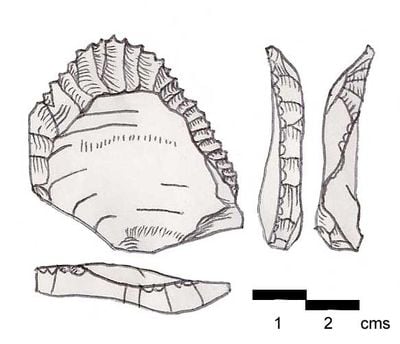
The pierced shells found in levels XX to XV, probably worn as pendants, mark some of the earliest personal ornaments in Western Eurasia, contemporary with those of Enkapune Ya Muto in Kenya. The site also yielded Emireh points and Ksar Akil flakes, the tool type most common there.
The site is positioned in steep terrain with narrow access beneath the cliff, so sturdy footwear and caution are needed. It is helpful to check in advance about accessibility and any available guided visits before heading to the location.
The site yielded two hominin fossils: Egbert, a juvenile Homo sapiens skull now in the National Museum of Beirut, and Ethelruda, a maxilla fragment found in 1947 and long thought lost before being relocated in museum storage. Ethelruda, dated to about 42,000 years ago, is the oldest human fossil from the shelter.
The community of curious travelers
AroundUs brings together thousands of curated places, local tips, and hidden gems, enriched daily by 93,631 contributors worldwide.