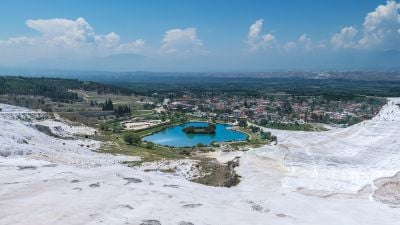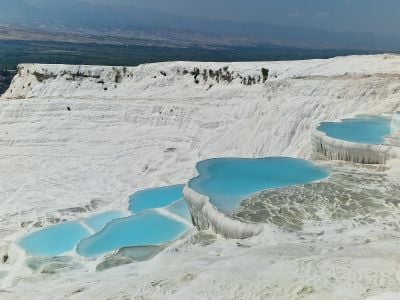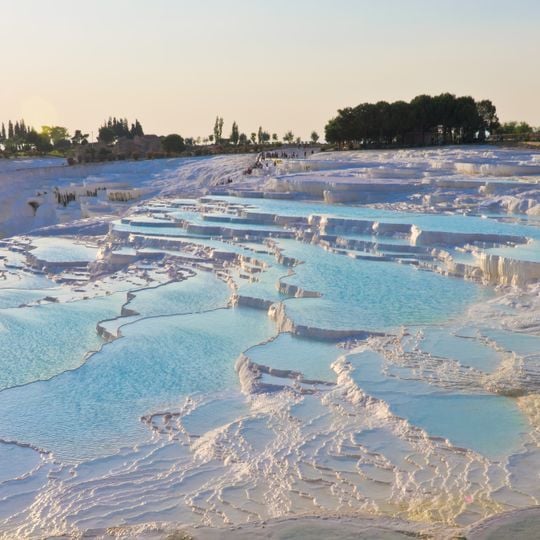
Pamukkale, Thermal springs in Denizli Province, Turkey
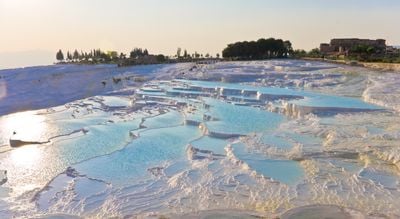
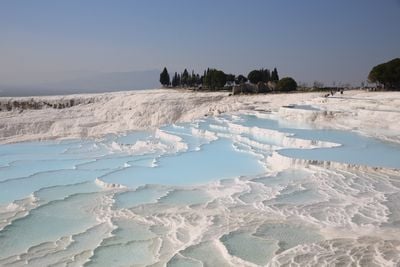
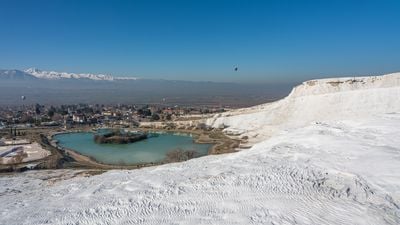
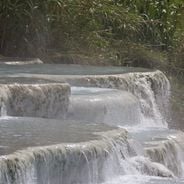
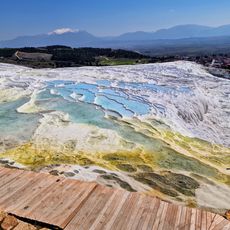
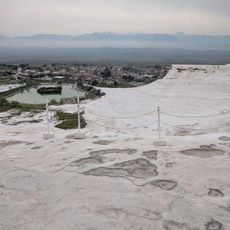
The white travertine terraces extend 8900 feet (2700 meters) in length and descend 525 feet (160 meters) down the hillside, filled with mineral-rich thermal water reaching temperatures up to 95 degrees Fahrenheit (35 degrees Celsius). The water flows from several springs with a combined output of approximately 66 gallons (250 liters) per second and deposits calcium carbonate daily. The basin-shaped formations develop through evaporation and calcification, creating natural stepped pools of varying sizes across the slope.
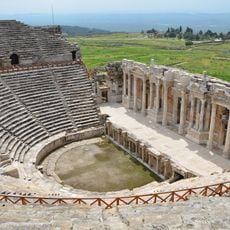
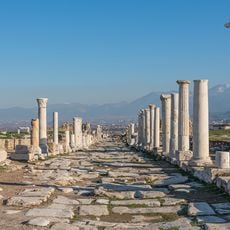
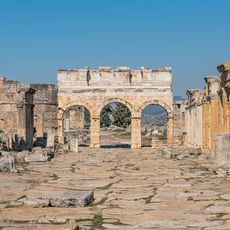
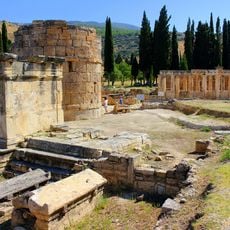
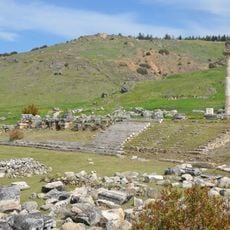
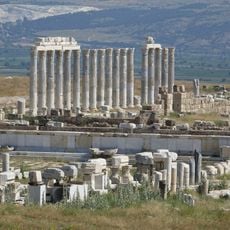
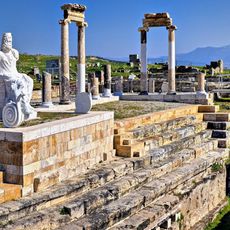
The ancient Greek city of Hierapolis was founded over the thermal springs in the 2nd century BC and developed into a major spa town during Hellenistic and Roman times. After several earthquakes the city was extensively rebuilt in the 1st century AD and received monumental baths, theaters and temples. Christianity spread early in the city where the Apostle Philip suffered martyrdom in 80 AD. The settlement was finally abandoned in the 14th century following a severe earthquake that devastated the region and ended centuries of continuous habitation.
The Turkish name Pamukkale means Cotton Castle and refers to the white calcium carbonate deposits formed through thousands of years of mineral precipitation. The thermal springs were considered therapeutic in ancient times and attracted the sick from across the Roman Empire. Today the site represents Turkish natural heritage and draws more than two million visitors annually who come to explore both the geological formations and the archaeological remains of the ancient spa city built above.
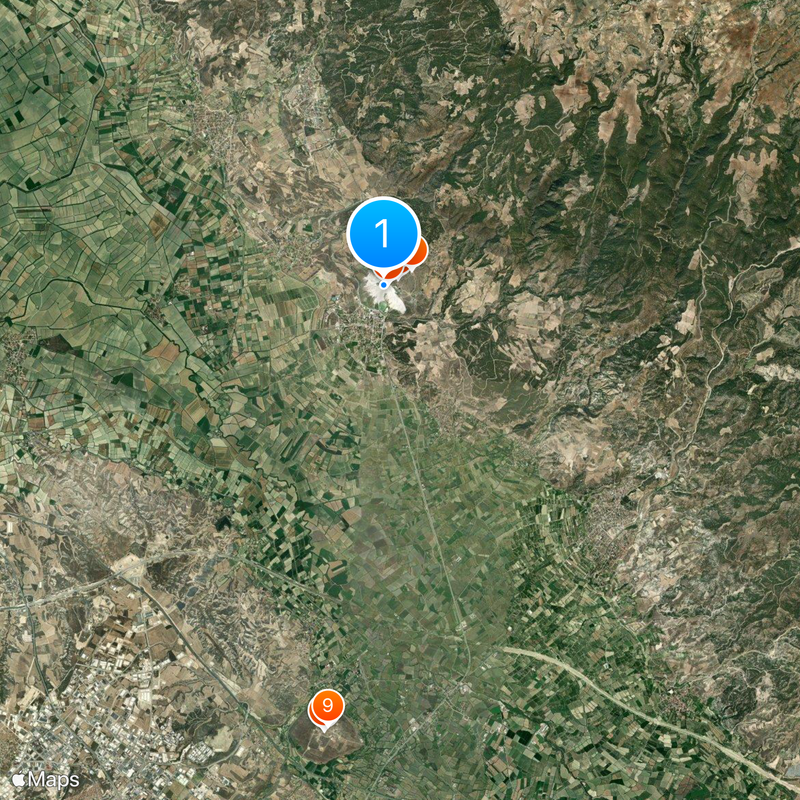
The site is open daily from 6:30 AM to 8:00 PM with access through three different entrances. Visitors must walk barefoot on the travertine terraces to protect the delicate formations. The best visiting time falls between April and June or September and November when temperatures are moderate. Admission includes both the thermal pools and the archaeological site of Hierapolis with its museum and ancient theater. Regular minibuses operate from Denizli, located 12 miles (20 kilometers) away, with the journey taking approximately 30 minutes.
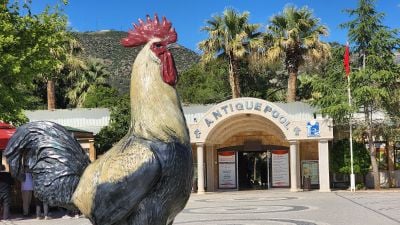
Visitors can swim among submerged Roman columns that collapsed into the ancient bath during a 7th century earthquake at Cleopatra's Pool. The 95 degrees Fahrenheit (35 degrees Celsius) carbonated water bubbles up through the architectural remains, creating an extraordinary connection between natural phenomenon and Roman engineering. Separate admission to this historic thermal bath costs extra beyond regular park access and allows bathing amid two thousand year old marble fragments and Corinthian capitals scattered across the pool floor.
The community of curious travelers
AroundUs brings together thousands of curated places, local tips, and hidden gems, enriched daily by 91,121 contributors worldwide.