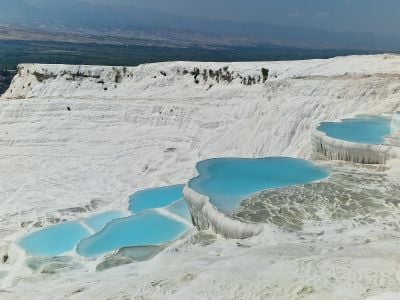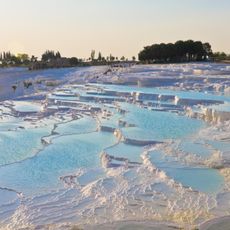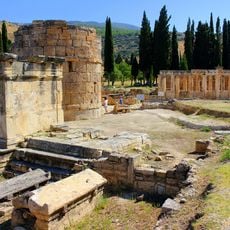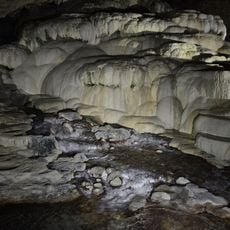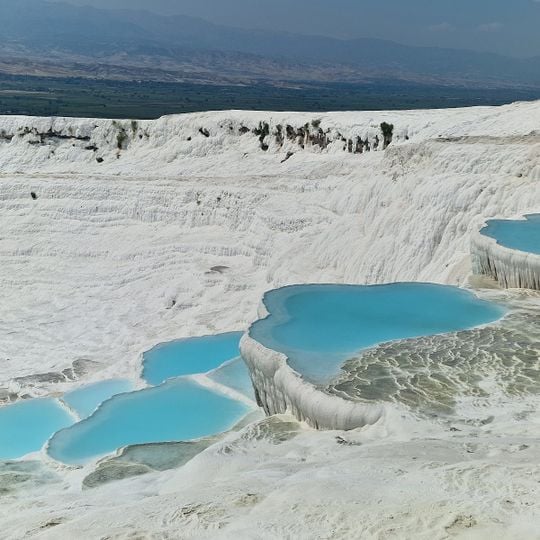
Travertines of Pamukkale, Natural thermal pools in Pamukkale, Turkey.
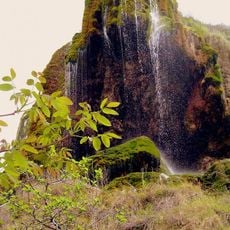
The white limestone terraces form a cascading series filled with mineral-rich thermal waters flowing down the mountainside at temperatures around 95 degrees Fahrenheit (35 degrees Celsius), acquiring their characteristic white color through continuous mineral deposition from the springs above.
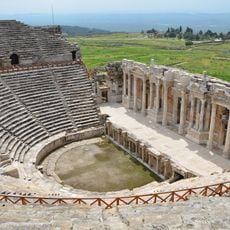
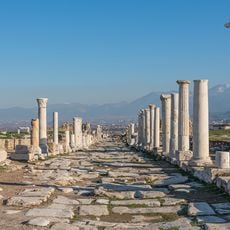
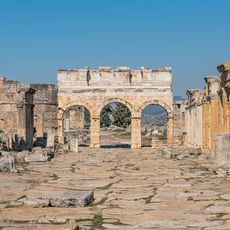
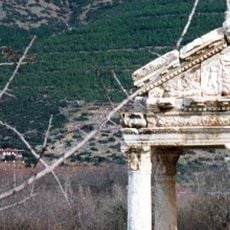
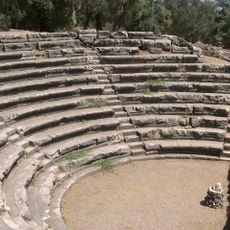
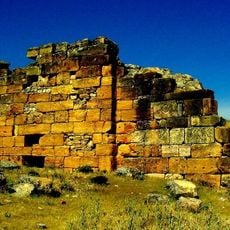
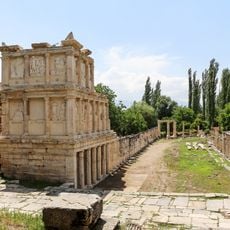
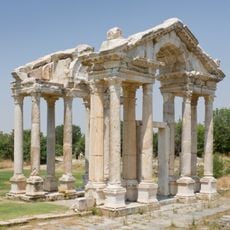
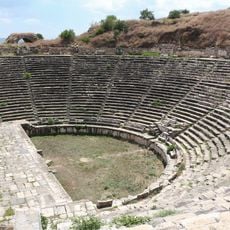
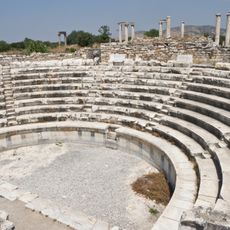
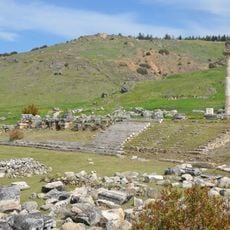
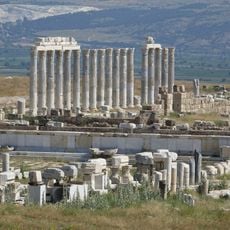
Romans constructed the city of Hierapolis around these thermal springs in the second century BCE, establishing a major healing center that attracted wealthy visitors from across the Roman Empire for centuries, seeking relief from various ailments through bathing in the therapeutic waters.
The Turkish name Pamukkale means Cotton Castle and describes the white calcium deposits of this UNESCO World Heritage site, which has attracted people seeking healing in the mineral springs for centuries and today represents one of Turkey's most visited natural wonders.
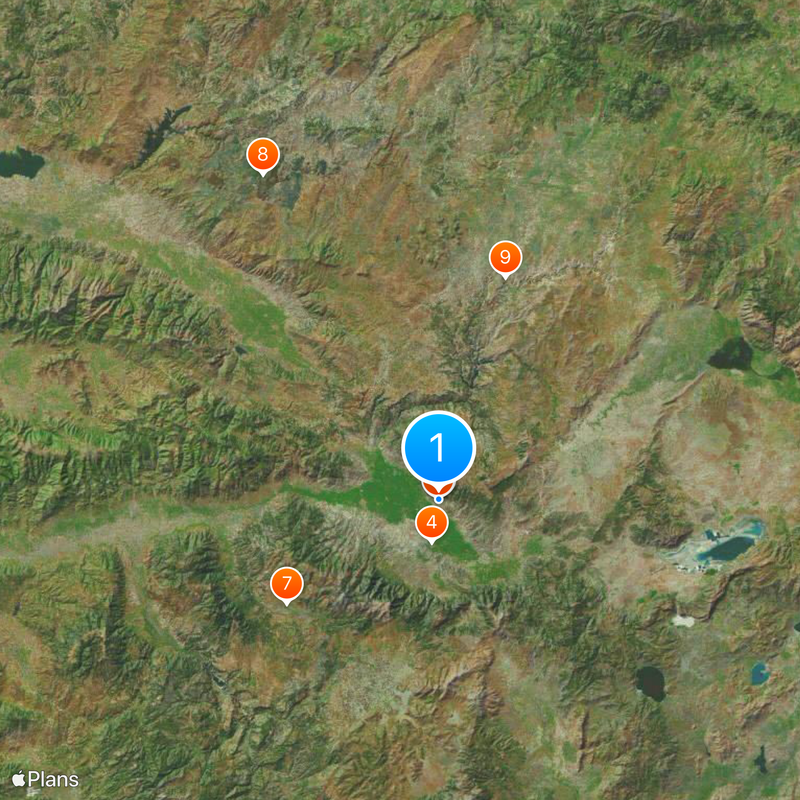
Visitors must remove their shoes to walk on the travertines and can access the site through either the north entrance near Hierapolis or the south entrance from town. Early morning hours or late afternoons offer fewer crowds and more favorable lighting conditions for photography.
Natural limestone deposits have created over 17 water terraces across the hillside, forming white calcite basins where thermal waters collect. The geological process continues today with approximately 66 gallons (250 liters) of water per second flowing from the springs, adding new layers of mineral deposits.
The community of curious travelers
AroundUs brings together thousands of curated places, local tips, and hidden gems, enriched daily by 60,000 contributors worldwide.