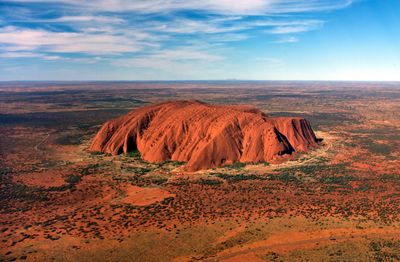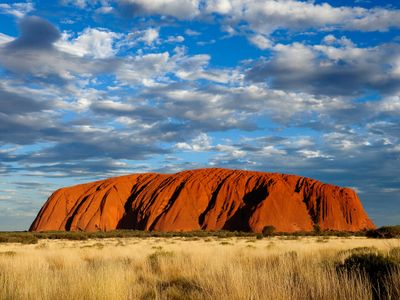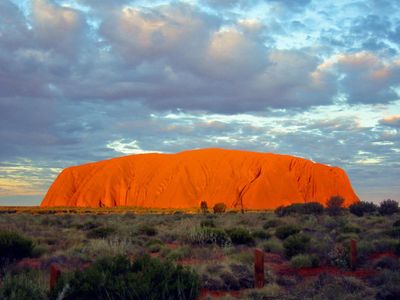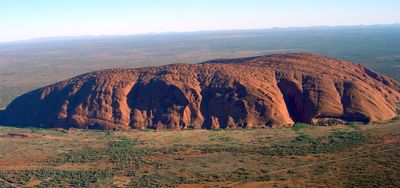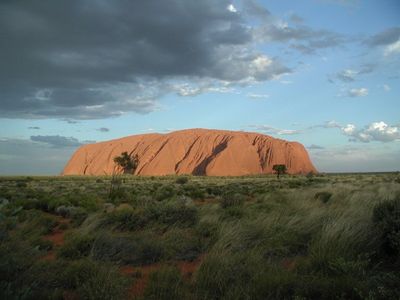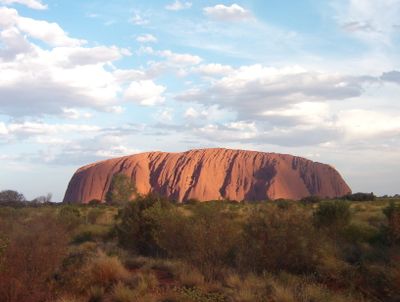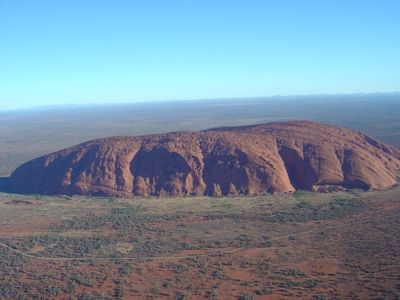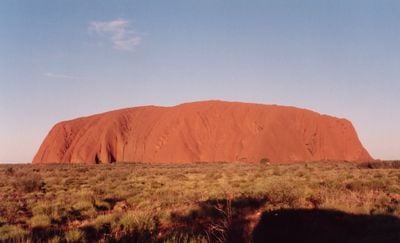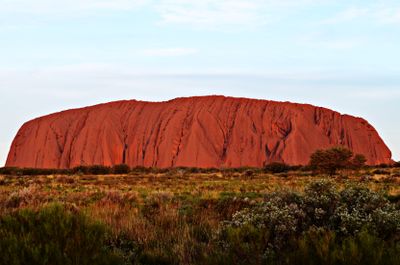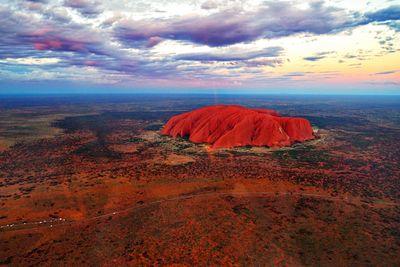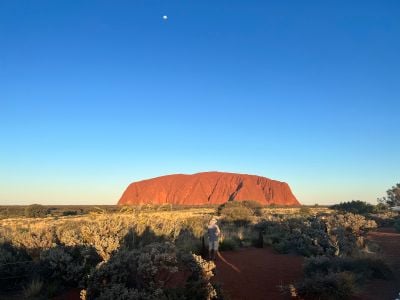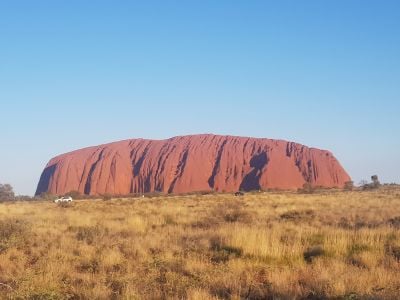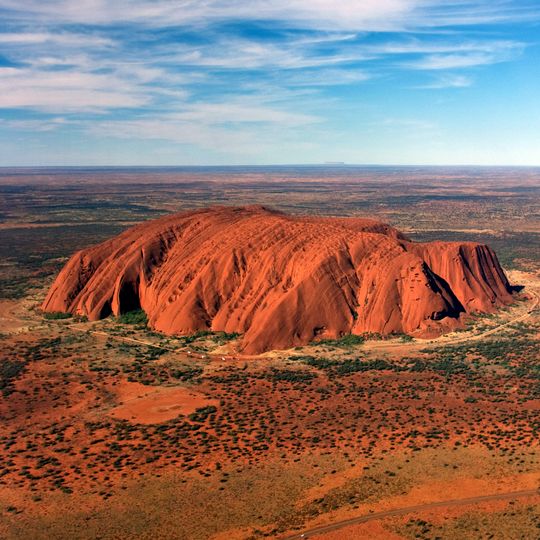
Uluru, Sandstone inselberg in Northern Territory, Australia
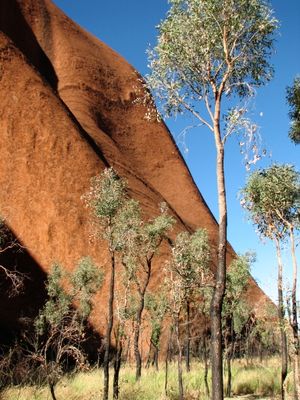
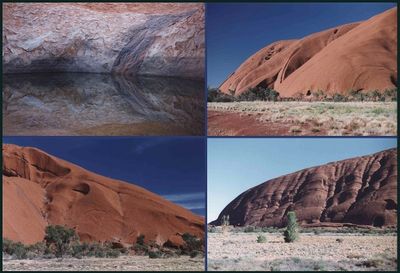
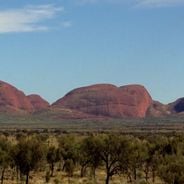
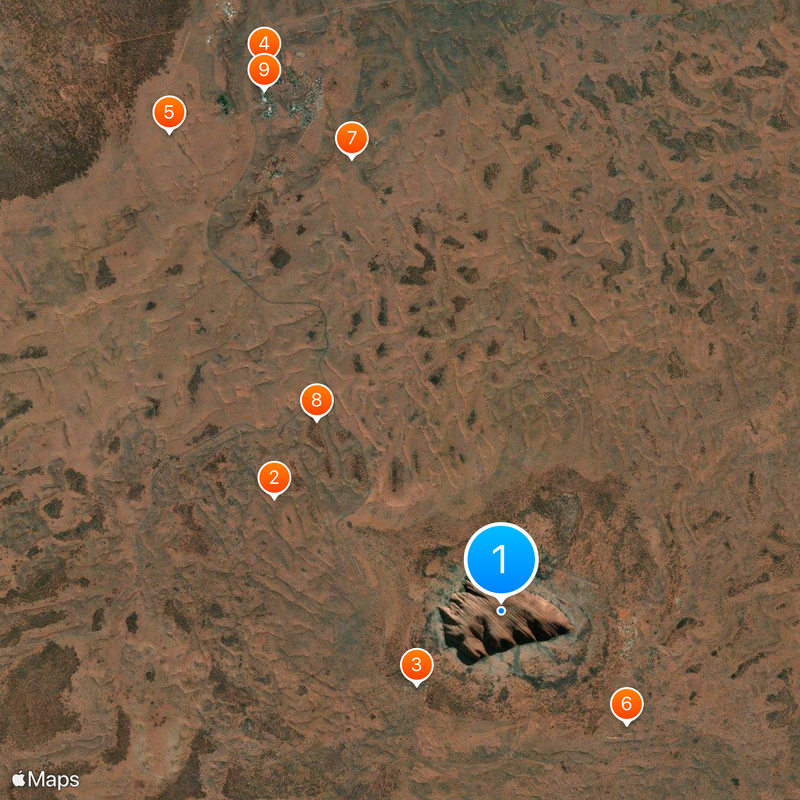
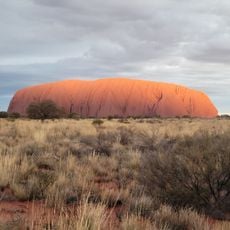
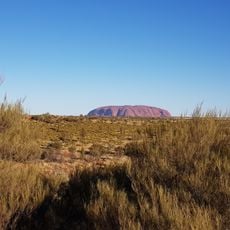
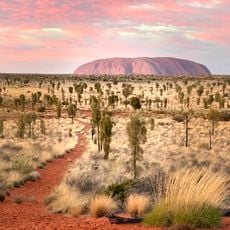
The sandstone monolith rises 1142 feet (348 meters) from surrounding plains with steep flanks and reaches an elevation of 2831 feet (863 meters) above sea level. The surface shows grooves, caves, and weathering patterns formed through thousands of years of erosion, while the base circumference measures about 5.8 miles (9.4 kilometers) with the longest axis running northwest to southeast.
The sandstone formed from river sediments about 600 million years ago, when the area was covered by a mountain range. William Gosse sighted the rock on 19 July 1873 and named it Ayers Rock after Sir Henry Ayers. On 26 October 1985 the government returned ownership to the Pitjantjatjara, who lease it back for joint management with the national parks agency.
The Anangu continue ceremonies and care for rock paintings while preserving oral creation stories that see the land as a living being. Some sections remain closed because they hold sacred meaning for traditional rituals and initiation rites, while local families share selected narratives with guests and keep other stories within the community.
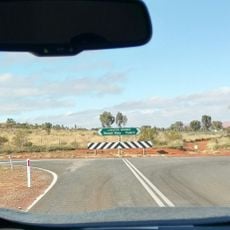
The national park requires visitors to carry enough water supplies and sun protection, as temperatures in summer regularly exceed 104 degrees Fahrenheit (40 degrees Celsius). Rangers offer guided walks at dawn and sunset when heat is more tolerable, while access is via Yulara, located 12 miles (20 kilometers) away, which provides hotels, campsites, and restaurants.
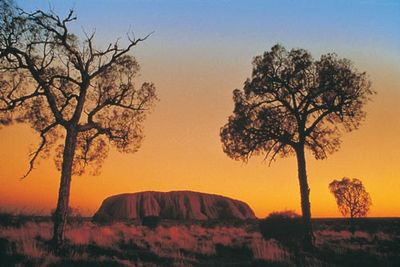
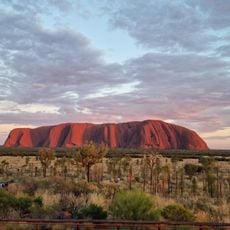
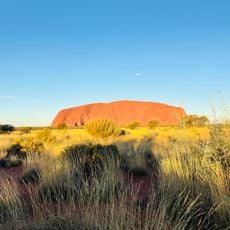
The arkose sandstone composition creates color transformations from brown to red throughout the day through mineral oxidation and light reflection. Rainfall transforms dry watercourses into temporary waterfalls that cascade down the flanks, while geologists have determined that the formation tilts about 1 centimeter per century due to tectonic movements in the region.
The community of curious travelers
AroundUs brings together thousands of curated places, local tips, and hidden gems, enriched daily by 92,135 contributors worldwide.